Thymosin
Showing all 2 results
-
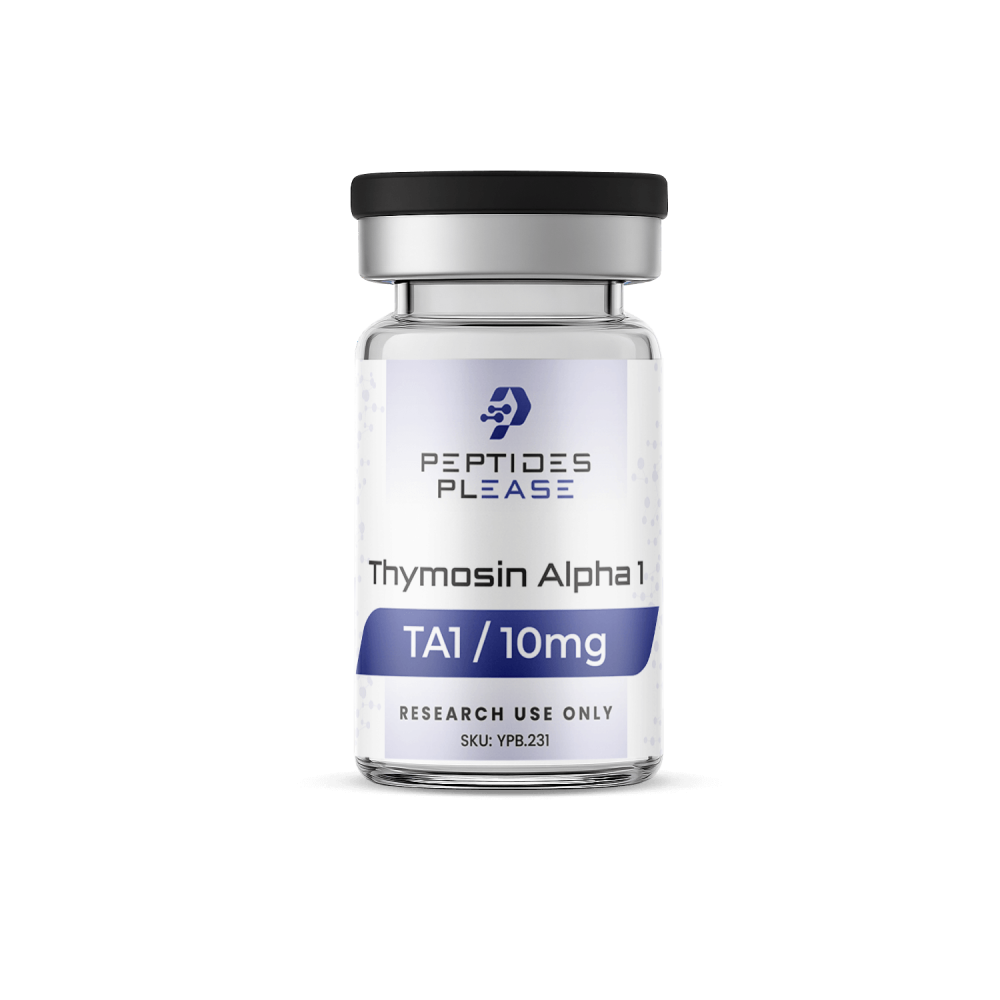 ThymosinThymosin Alpha 1 (TA1) (10mg)
 -
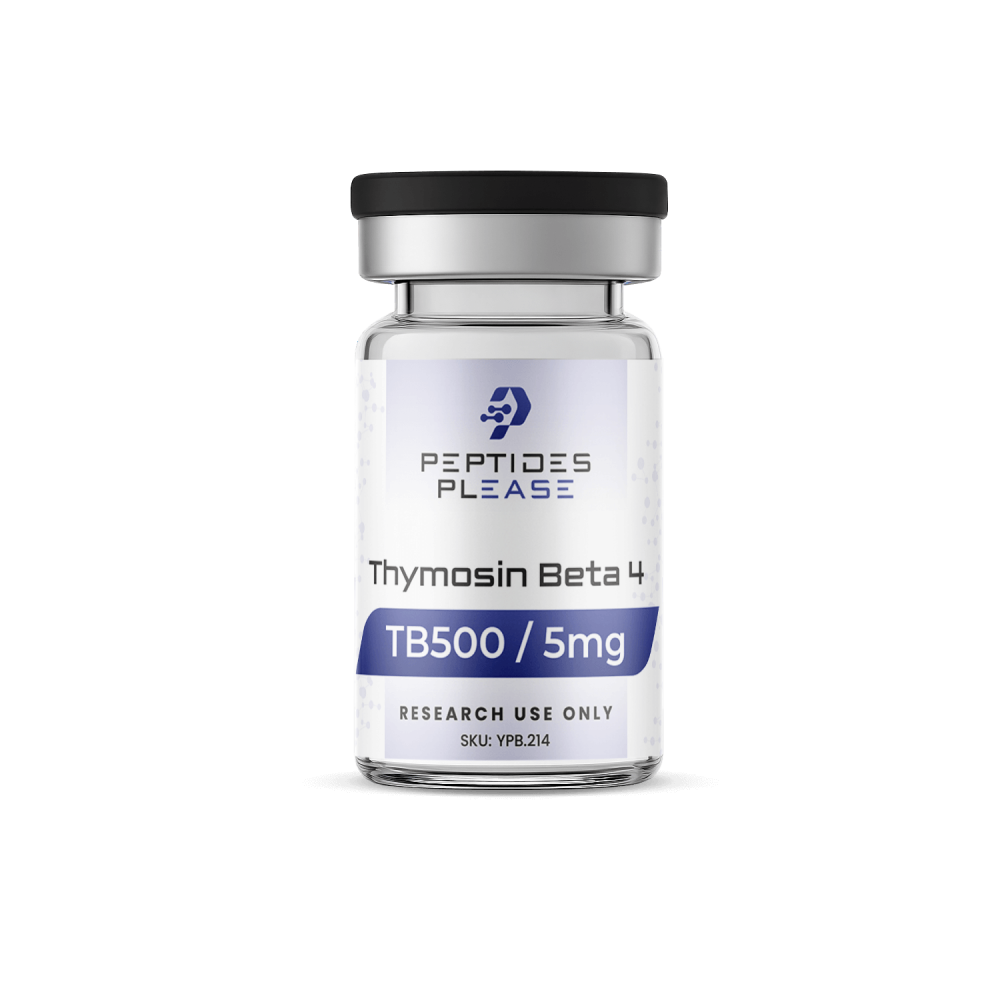
Thymosin peptides are thymus-derived compounds studied for two very different jobs: Thymosin Alpha 1 (Tα1) is researched for immune signaling and T-cell maturation, while Thymosin Beta 4 (Tβ4 / TB500) is studied for tissue repair and cell migration. Every vial below is a research-grade compound at ≥99% purity, verified by independent third-party laboratory testing. All products are sold strictly for in-vitro and laboratory research use and are not for human or animal consumption.
Thymosin Alpha 1 vs Thymosin Beta 4 (TB500)
Although both peptides come from the thymus, they target different mechanisms in laboratory research. Thymosin Alpha 1 (TA1) is a precise synthetic 28-amino-acid sequence studied for immune modulation, dendritic cell function, and cytokine balance. Thymosin Beta 4 (TB500) is the synthetic fragment representing the active region of the full Tβ4 protein; its smaller molecular weight is thought to aid migration through tissue, which is why it is favored in wound-repair and cellular-migration studies. Treating the two as interchangeable is one of the most common errors in the literature — they are not the same compound and do not act on the same pathways.
Buy Thymosin Alpha 1 (TA1) Shop Thymosin Beta 4 (TB500)
Handling and Reconstitution in a Research Setting
Both peptides ship as lyophilized (freeze-dried) powder and must be reconstituted before study. The integrity of the data depends on preserving the molecule from reconstitution through to use:
- Reconstitute precisely. Introduce an appropriate diluent such as bacteriostatic water slowly, aiming the stream at the glass wall of the vial rather than directly onto the powder.
- Swirl, never shake. Gently swirl until the solution is completely clear with no visible particles. Shaking can shear the delicate peptide bonds.
- Avoid oral handling models. These sequences are degraded rapidly by gastrointestinal enzymes, which is why parenteral routes are used in research protocols.
- Work aseptically. Follow rigorous sterile technique — clean surfaces with 70% isopropyl alcohol, wipe the rubber stopper before each puncture, and use a fresh single-use syringe each time — to prevent microbial contamination (NCBI aseptic technique reference).
Storage and Stability
Thymosin peptides are fragile and sensitive to environmental shifts. Store reconstituted solution refrigerated at roughly 2°C to 8°C to prevent thermal degradation, and use within the recommended timeframe after the vial is first punctured. Reconstituted peptide does not keep at room temperature — thermal stress degrades it and compromises any downstream analysis. Cold-chain discipline is the single biggest factor in keeping a reconstituted vial usable across a longer study. Peptides Please ships every order to research customers in the USA and Canada, and each lot is verified at ≥99% purity through independent third-party laboratory testing before it leaves the facility.
Factors That Influence Thymosin Research Outcomes
Several variables are documented as affecting results when these peptides are studied, including the route modeled, timing against circadian rhythm, the peptide variant’s half-life, hydration and metabolic rate of the model, concurrent chemical exposure that may compete for receptor binding, and ambient temperature stress. For tissue-targeting work, Thymosin Beta 4 (TB500) is studied for its role in actin sequestration and directed cell migration to injury sites; see this peer-reviewed overview of Thymosin Beta 4 for background.
Common Misconceptions
- More is not better. Excessive concentration is associated with receptor desensitization, not a stronger effect.
- “Research grade” is not self-certifying. The label only means something when it is backed by an independent certificate of analysis.
- Alpha 1 ≠ Beta 4. They target distinct mechanisms (T-cell maturation versus cellular migration) and are not substitutes for one another.
- Reconstituted peptide is not room-temperature stable. It must be refrigerated.
Frequently Asked Questions
What is the difference between Thymosin Alpha 1 and Thymosin Beta 4?
Thymosin Alpha 1 (TA1) is a 28-amino-acid sequence studied for immune signaling and T-cell maturation. Thymosin Beta 4 (TB500) is a different sequence studied for tissue repair and cell migration. They are separate compounds with separate research applications.
How are thymosin peptides prepared for research?
Both ship as lyophilized powder and are reconstituted with a sterile diluent such as bacteriostatic water, added slowly against the vial wall and swirled (not shaken) until clear.
How should reconstituted thymosin be stored?
Refrigerated at approximately 2°C to 8°C, and used within the recommended window after first puncture. It is not stable at room temperature.
Is thymosin at Peptides Please third-party tested?
Yes. Every lot is verified at ≥99% purity through independent third-party laboratory testing. All products are for laboratory research use only and are not for human or animal consumption.
Shop Research-Grade Thymosin
Both compounds are in stock and ready for laboratory research. Explore related longevity and bioregulator compounds in our bioregulators range, and pick up reconstitution water to prepare your vials.