Cagrilintide
Showing the single result
-
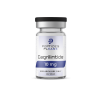
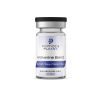
 CagrilintideCagrilintide (10mg)
Cagrilintide is a long-acting amylin analog studied for its role in appetite regulation and body-weight research. It mimics amylin, a gut hormone co-secreted with insulin, to slow gastric emptying and strengthen satiety signaling. This page covers what cagrilintide is, its mechanism, the dosage and titration schedules reported in clinical trials, combination protocols, side effects and correct storage. Every product listed here is sold for laboratory research use only and is not for human or animal consumption.
Buy Cagrilintide Peptide for Research at Peptides Please
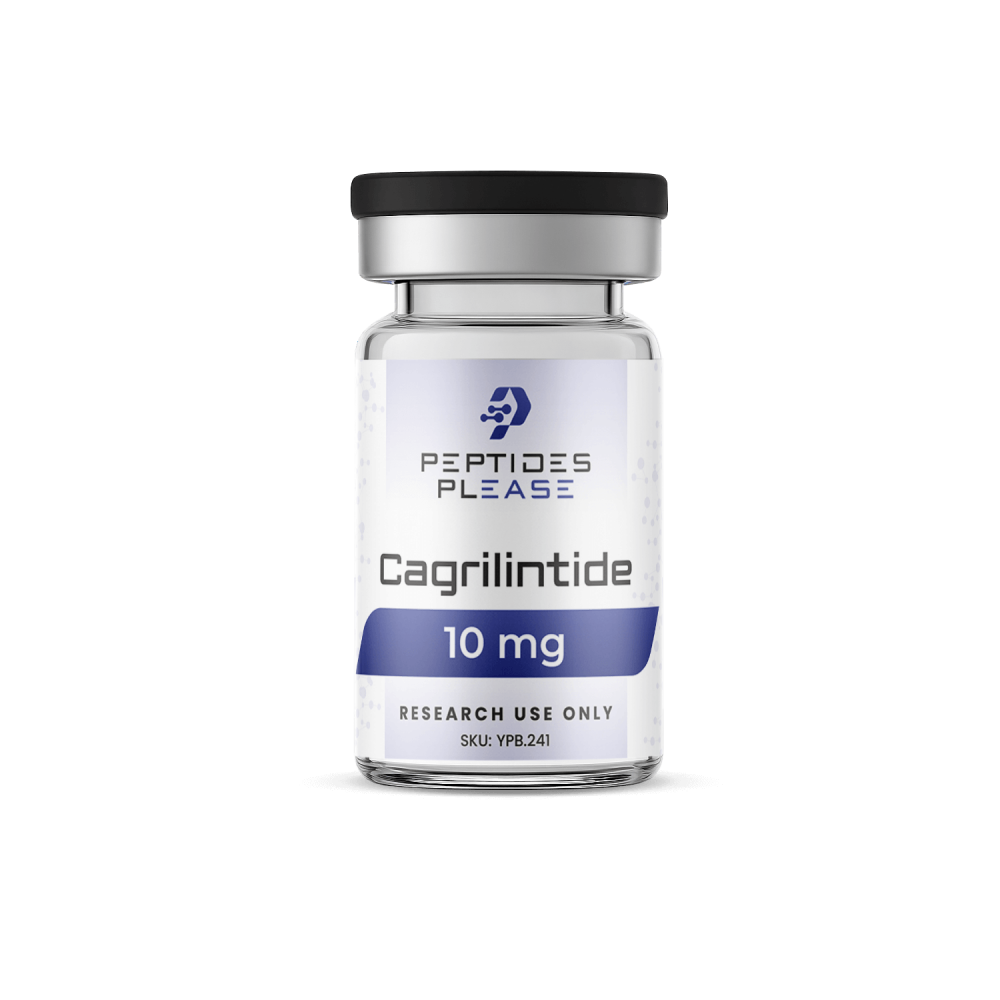
Buy cagrilintide peptide (10mg) for research at Peptides Please, a potent amylin analog studied for reducing food intake and driving weight loss in obesity research models. Every vial is manufactured in certified facilities at high purity and verified through independent third-party laboratory testing, so the starting material for your study is consistent and reproducible. Peptides Please ships cagrilintide to research customers across the USA and Canada.
What Is Cagrilintide?
Cagrilintide is a long-acting, acylated amylin analogue (research code AM833) developed as an investigational obesity compound. It mimics the gut hormone amylin to promote satiety, slow gastric emptying and reduce food intake, and it is frequently studied alongside semaglutide in the combination known as CagriSema. In double-blind, placebo-controlled trials it has been associated with meaningful reductions in body weight, and as of 2026 it is not approved by the FDA for any use, either alone or in combination.
What Is Cagrilintide Peptide?
The cagrilintide peptide is a synthetic analog of endogenous amylin, structurally modified with an acyl (fatty-acid) side chain that extends its half-life and supports once-weekly dosing in research protocols. It is classified as a non-selective agonist at the amylin receptors (AMY1 to AMY3) and the calcitonin receptor, which is what allows it to reproduce amylin’s natural appetite-regulating role in metabolic research.
Cagrilintide Mechanism of Action
Cagrilintide drives its effects by activating amylin and calcitonin receptors in the brain, particularly in the hindbrain. A 2026 study confirmed it lowers body weight through brain amylin receptors 1 and 3. Its main actions studied in research models are:
- Appetite regulation: targets hindbrain receptors (such as the area postrema) to suppress hunger and promote satiety, replicating amylin’s natural role.
- Reduced food intake: lowers calorie consumption and produces dose-dependent fat-mass reduction while largely preserving lean mass.
- Delayed gastric emptying: prolongs the retention of food in the stomach, amplifying fullness signals.
- Synergy with GLP-1 agonists: combined with semaglutide (as CagriSema), it delivers stronger dual-agonist effects than monotherapy.
- Long-acting profile: acylation enables once-weekly dosing with sustained receptor activation.
Cagrilintide Peptide Benefits
The benefits of cagrilintide observed in research center on durable, well-tolerated weight reduction. As a standalone compound, cagrilintide produced about 11.8% weight loss at 68 weeks with fewer gastrointestinal effects than semaglutide in trial participants. Key research benefits include:
- Significant, sustained weight reduction: dose-dependent fat-mass loss that is maintained over long study windows.
- Best-in-class combination results: paired with semaglutide as CagriSema, trials have reported weight loss above 20% over 68 weeks, among the strongest results for any near-approval obesity compound.
- Improved glycemic markers: slowed gastric emptying and glucagon suppression support more stable post-meal blood sugar in type 2 diabetes research.
- Favorable tolerability: lower rates of gastrointestinal disturbance than semaglutide in head-to-head study arms, making it of interest for models where GLP-1 tolerance is a limiting factor.
What Is Cagrilintide Used For?
In research, cagrilintide is investigated for chronic weight management and type 2 diabetes models, most often as part of the CagriSema combination. By mimicking amylin, it curbs appetite, slows gastric emptying and boosts satiety.
- Weight management: delivers up to roughly 10 to 12% body-weight reduction in trials when studied alone.
- Combination therapy (CagriSema): with semaglutide, phase 2 and 3 trials show 17 to 22% weight loss.
- Metabolic improvements: supports glycemic control, lower blood pressure and reduced waist circumference in study populations.
Cagrilintide Dosage: What the Research Reports
The figures below are dosing protocols recorded in published clinical trials and the research literature. They are provided for scientific reference only. Cagrilintide sold by Peptides Please is a research compound and is not for human or animal use.
Across trials, cagrilintide is administered once weekly by subcutaneous injection and is introduced at a low dose that is stepped up gradually to limit gastrointestinal effects. A commonly reported step-up schedule reaches a maintenance dose of 2.4 mg once weekly over roughly 16 to 20 weeks.
Cagrilintide Dosage Chart
| Phase | Weekly dose reported | Study period |
|---|---|---|
| Step 1 | 0.25 mg | Weeks 1 to 4 |
| Step 2 | 0.5 mg | Weeks 5 to 8 |
| Step 3 | 1.0 mg | Weeks 9 to 12 |
| Step 4 | 1.7 mg | Weeks 13 to 16 |
| Maintenance | 2.4 mg | Week 17 onward |
Some phase 2 protocols used a different ramp, escalating every four weeks through 0.16, 0.3, 0.6, 1.2, 2.4 and up to 4.5 mg across a 20-week period. These variations are documented in the cagrilintide and semaglutide trial record on ClinicalTrials.gov.
Cagrilintide Titration Schedule
Titration is the core methodology in this research: peptide concentration is adjusted systematically to reach a peak physiological effect while minimizing adverse gastrointestinal reactions. For once-weekly cagrilintide, a structured titration schedule rests on three components:
- Low-dose entry: starting at a minimal entry concentration prevents overwhelming the gastrointestinal tract during the priming phase.
- Incremental steps: predetermined escalations let steady-state levels rise in a controlled, predictable way for high-quality longitudinal data.
- Biological adaptation: allowing time for appetite signals and gastric motility to recalibrate keeps the compound’s activity in step with the body’s own endocrine responses.
Why a Titration Schedule Is Needed
A gradual escalation matters for four reasons: gastrointestinal tolerability, because amylin analogs alter normal peristalsis if introduced too fast; endocrine calibration, because amylin regulates post-meal glucose and digestion; mitigating severe nausea, the side effect that most often accompanies high starting doses; and preserving research parameters, by preventing extreme swings in caloric intake that would distort weight-loss data.
Starting Dose and Dose Increases
Research protocols begin at the lowest practical weekly concentration and hold it long enough for adaptation before the first increase. Increases are then applied on a fixed cadence, typically every four weeks, with each step only taken once the previous dose is well tolerated. Escalating on a schedule rather than by reaction keeps the data comparable across subjects.
Adjustments for Special Populations and When to Pause
Study designs slow the ramp for models that are more sensitive to gastrointestinal effects, extending the interval between increases rather than lowering the target. A dose is paused or reduced when nausea, vomiting or other effects become pronounced, returning to the last well-tolerated step before resuming. This protects both subject retention and data integrity.
Cagrilintide Dosage With Tirzepatide
There is no approved protocol for combining cagrilintide with tirzepatide; all figures come from investigational research. In reported combination models, tirzepatide is introduced at 2.5 mg weekly alongside cagrilintide at about 0.3 mg weekly, with both escalated gradually to limit overlapping gastrointestinal effects. Cagrilintide has been titrated stepwise up to 4.5 mg weekly, while tirzepatide is increased up to 15 mg weekly depending on tolerability. Because both act on appetite and gastric emptying, researchers stagger increases carefully.
Cagrilintide Dosage With Retatrutide
No approved dosage exists for cagrilintide with retatrutide either; the data is entirely investigational. In these settings cagrilintide has been explored at 0.3, 0.6, 1.2 and 2.4 mg weekly, while retatrutide has been studied up to 12 mg weekly. Titration usually begins both agents at their lowest available dose, with escalation roughly every four weeks. These are experimental combinations with no regulatory approval as of 2026.
Cagrilintide Side Effects
The side effects reported for cagrilintide in trials are predominantly mild to moderate gastrointestinal symptoms: nausea, vomiting and diarrhea. These are most common during the initial titration phase, are dose-dependent, and typically fade as subjects acclimate. In head-to-head study arms, cagrilintide produced notably lower rates of gastrointestinal disorders than semaglutide, which is why it is of interest for research models involving GLP-1 intolerance. As with any amylin analog, rapid dose increases raise the risk of pronounced nausea, which is the main reason a structured titration schedule is used.
How to Store Cagrilintide
Cagrilintide is an acylated peptide whose long-acting profile depends on preserving specific side chains that are prone to environmental degradation. Maintaining its biochemical stability and biological potency is essential for reliable data. The key storage principles are:
- Keep it lyophilized until use: in freeze-dried powder form the peptide is in a stable, glass-like solid state that resists molecular movement; maintain this until the moment of reconstitution.
- Strict temperature regulation: store the lyophilized powder cold and avoid heat spikes, which add kinetic energy and break the weak bonds holding the peptide’s shape.
- Protect from light: UV and strong visible light can trigger free-radical reactions that target the acylated side chains, stripping the long-acting properties.
- Control moisture: lyophilized cagrilintide is hygroscopic; even trace water can drive hydrolysis that splits the sequence into inactive fragments.
- Track post-reconstitution timelines: once a solvent is added, the peptide becomes vulnerable to aggregation and cleavage, so set strict use-by windows for the solution.
Short-Term and Long-Term Storage
For short windows, keep the reconstituted solution refrigerated and use it within the days indicated for your protocol. For long-term storage, hold the lyophilized powder frozen, away from light and moisture, and avoid repeated freeze-thaw cycles, which accelerate degradation. Reconstitute only with an appropriate sterile solvent such as bacteriostatic water and never with tap or drinking water.
Research Cagrilintide Peptide for Sale at Peptides Please
Peptides Please supplies research-grade cagrilintide (10mg) at high purity, manufactured in certified facilities and verified by independent third-party laboratories, with a certificate of analysis available. If you are sourcing material for metabolic, appetite or amylin-signaling research, the consistency of the starting compound is as important as your storage protocol.
Researchers studying cagrilintide often work across the metabolic family, so you may also want to explore Mazdutide, SLU PP 332 and 5-Amino-1MQ.
Frequently Asked Questions
What is cagrilintide peptide?
Cagrilintide is a long-acting acylated amylin analog (research code AM833) studied for appetite regulation and weight-loss research. It mimics amylin to slow gastric emptying and increase satiety, and is often combined with semaglutide as CagriSema.
What is the cagrilintide dosage in research?
Trials commonly step cagrilintide up from 0.25 mg once weekly to a 2.4 mg maintenance dose over roughly 16 to 20 weeks. Some phase 2 protocols ramped every four weeks up to 4.5 mg. These figures are research protocols only, not human-use instructions.
What is a cagrilintide titration schedule?
It is a structured, gradual escalation of the weekly dose that lets biological systems adapt while limiting gastrointestinal effects. Doses are typically increased on a fixed cadence, often every four weeks, only after the prior step is tolerated.
What is the cagrilintide dosage with tirzepatide?
In investigational combination research, tirzepatide has started at 2.5 mg weekly with cagrilintide near 0.3 mg weekly, both escalated gradually. There is no approved protocol for this combination as of 2026.
What are the side effects of cagrilintide?
Reported effects are mostly mild to moderate gastrointestinal symptoms such as nausea, vomiting and diarrhea, most common during early titration and usually transient. Trials showed lower gastrointestinal rates than semaglutide.
How do you store cagrilintide?
Keep it lyophilized, cold, dark and dry until use. After reconstitution with a sterile solvent, refrigerate and use within the protocol window, and avoid repeated freeze-thaw cycles.
Does cagrilintide work with semaglutide?
In the CagriSema combination, phase 2 and 3 trials reported 17 to 22% weight loss, stronger than either compound alone. This synergy is a major focus of current metabolic research.
Where can I buy cagrilintide for research?
You can buy third-party tested cagrilintide (10mg) from Peptides Please, shipped across the USA and Canada for laboratory research use only.