FOXO4 Peptide
Showing the single result
-
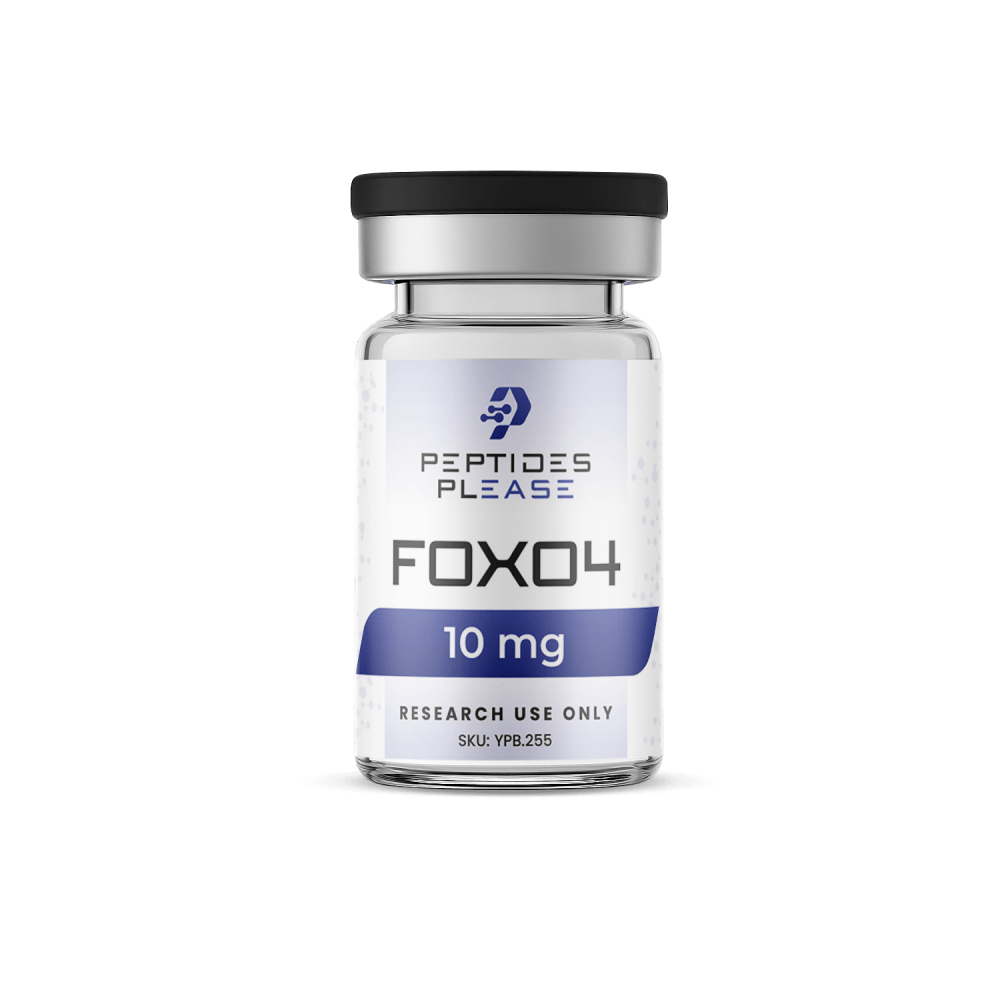 FOXO4 PeptideFOXO4 (10mg)
The FOXO4 peptide emerges as a promising therapeutic agent in the fight against aging by specifically targeting senescent cells, which accumulate with age and drive tissue dysfunction through the senescence-associated secretory phenotype (SASP). This inflammatory secretome disrupts cell cycle regulation and promotes cellular senescence, contributing to chronic diseases. By mimicking the FOXO4-DRI (FOXO4-p53 interfering peptide), the FOXO4 peptide selectively induces cell death in these senescent cells via apoptosis, sparing healthy ones and restoring tissue function. Preclinical studies demonstrate its efficacy in models like targeting senescent Leydig cells in the testes, where it rejuvenates testosterone production and mitigates age-related hypogonadism.
Further validating its potential, the FOXO4 peptide has shown remarkable results in vitro expanded human chondrocytes, reducing senescence markers and enhancing cartilage regeneration for osteoarthritis therapies. By dismantling the senescent burden, it not only curbs SASP-driven inflammation but also reactivates proliferative capacity, offering a targeted strategy for age-related degenerative conditions across musculoskeletal and endocrine tissues.
Buy FOXO4 Peptide For Research at Peptides Please
Buy FOXO4 Peptide for research at Peptides Please, your trusted source for high-purity research-grade peptides designed to explore cutting-edge mechanisms like targeted apoptosis in senescent cells, promoting tissue homeostasis by eliminating senescent cells and damaged cells. This D-amino acids-enhanced peptide offers researchers a powerful tool to investigate lipid metabolism, insulin signaling pathways, and cellular rejuvenation, enabling precise studies into longevity, metabolic regulation, and age-related decline without compromising quality or reliability.
What Is FOXO4 Peptide?
FOXO4 is a key transcription factor belonging to the FOXO family of proteins, which play critical roles in regulating gene expression related to cellular integrity, programmed cell death, and responses to stress. Composed of L-amino acids, FOXO4 acts within the nucleus to influence pathways that combat cell aging, cell senescence, and cellular aging by promoting DNA repair, antioxidant defenses, and autophagy. In contexts like aged Leydig cells—responsible for testosterone production in the testes—FOXO4 helps maintain function amid oxidative stress, while its dysregulation contributes to age-related diseases such as metabolic disorders and impaired reproduction. The FOXO4 peptide, often derived synthetically, mimics or modulates these natural functions to potentially enhance cellular resilience.
In neurodegenerative diseases affecting the central nervous system, FOXO4’s involvement in transcription factors makes it a target for interventions aiming to mitigate neuronal cell senescence and programmed cell death, preserving cognitive health. Research explores FOXO4-derived peptides to disrupt harmful protein aggregates, like those in Parkinson’s or Alzheimer’s, thereby slowing progression of these age-related diseases. By bolstering cellular integrity and countering senescence pathways, FOXO4 peptides show promise in anti-aging strategies, though clinical applications remain investigational.
FOXO4 Peptide Mechanism of Action
The FOXO4 peptide operates primarily by disrupting the FOXO4-p53 interaction through a D-Arg retro-inverso peptide sequence that mimics the binding domain, thereby releasing p53 from nuclear sequestration and inducing apoptosis in senescent cells while acting as a potent tumor suppressor by selectively targeting damaged cells for clearance; this mechanism promotes tissue regeneration by alleviating senescence-associated secretory phenotype (SASP) burdens, as demonstrated in in vitro models and animal studies showing enhanced organ repair without broad cytotoxicity. Additionally, FOXO4 modulation influences endocrine pathways, potentially leading to reduced testosterone synthesis via altered steroidogenic gene expression in Leydig cells, and supports neurological function by reducing neuroinflammation and amyloid burden in models of neurodegeneration, highlighting its multifaceted role in anti-aging and health optimization.
FOXO4 Peptide Benefits
FOXO4 is one of the FOXO proteins, a family of FOXO transcriptional factors that act as transcriptional factors regulating gene expression in response to stress, nutrients, and hormones. The FOXO4-DRI peptide is a targeted inhibitor designed to disrupt FOXO4-p53 interactions, promoting senescent cell clearance without broad toxicity.
- Antioxidant Defense and Oxidative Stress Reduction: FOXO4 upregulates antioxidant enzymes like manganese superoxide dismutase (MnSOD), neutralizing free radicals and protecting cells from damage.
- Protein Homeostasis via Ubiquitin Proteasome System: FOXO4 activates the ubiquitin proteasome system, clearing damaged proteins to maintain cellular health and prevent age-related decline.
- Metabolic and Tissue Regulation: It influences adipose tissue by modulating fat storage and inflammation; helps regulate growth in muscle and other tissues; and supports tissue renewal through stem cell activation and repair pathways.
- Enhanced Physical Function and Longevity: By ensuring cells function properly longer, FOXO4 improves physical function, muscle endurance, and overall vitality, mimicking benefits seen in caloric restriction models.
FOXO4 Peptide Side Effects
Researchers observed potential side effects of FOXO4 peptide in preclinical studies, primarily through animal experiments focusing on its role in therapeutic elimination of senescent cells. Here’s a structured overview:
- Therapeutic Elimination and Safety Profile: FOXO4-DRI (a targeted peptide variant) promotes therapeutic elimination of senescent cells via p53-nuclear exclusion, reducing DNA damage accumulation. Researchers observed minimal acute toxicity in animal experiments, but long-term effects require further scrutiny.
- Proteasome Activity and Oxidative Stress: Enhanced proteasome activity helps clear damaged proteins, while glutathione peroxidase levels may fluctuate, potentially mitigating oxidative stress. Researchers observed transient dips in these markers in skeletal muscle, linked to age-dependent declines in cellular repair.
- Skeletal Muscle and Body Composition Impacts: In animal experiments, FOXO4 modulation preserved skeletal muscle mass and improved body composition by countering age-dependent declines. Researchers observed reduced fat accumulation and maintained lean tissue, supporting healthy aging without overt muscle catabolism.
- DNA Damage and Nuclear Exclusion: The peptide induces nuclear exclusion of FOXO4, triggering apoptosis in senescent cells with high DNA damage. Researchers observed this exact mechanism protects healthy cells, though off-target effects could amplify DNA damage in rapidly dividing tissues.
- Healthy Aging Considerations: Overall, researchers observed benefits for healthy aging, including slowed age-dependent declines in proteasome activity and glutathione peroxidase function. No severe side effects like organ toxicity were noted in short-term animal experiments, but human trials are needed to confirm.
Research FOXO4 Peptide for Sale at PeptidesPlease
Research FOXO4 Peptide, specifically the synthetic version FOXO4-DRI (D-Retro-Inverso), for sale at PeptidesPlease is ideal for research use, as this modified retro-inverso peptide—featuring D-amino acids in a reversed sequence—enhances stability and resistance to degradation while selectively inducing apoptosis in senescent cells to potentially restore tissue homeostasis, reverse aging effects, and mitigate chemotoxicity in preclinical models. Its other functions include disrupting FOXO4-p53 interactions to improve organ function, influencing insulin signaling, cell cycle regulation, oxidative stress pathways, and promoting younger biological tissue age, with cell-penetrating properties via HIV-TAT fusion for precise intracellular targeting in experimental settings. Available in high-purity lyophilized form (e.g., 10mg vials) from trusted suppliers like PeptidesPlease for lab investigations only—not for human consumption—FOXO4-DRI supports advanced studies in anti-aging, senolytics, and regenerative biology.
Frequently Asked Questions
What is FOXO4 peptide used for?
FOXO4 peptide, specifically the FOXO4-DRI (D-retro-inverso isoform) variant, is primarily researched as a senolytic agent. It selectively targets and induces apoptosis in senescent cells, which accumulate with age and contribute to tissue dysfunction, inflammation, and age-related conditions like keloid formation or reduced testosterone secretion. Studies show its use in models for clearing these cells to potentially improve tissue homeostasis, such as in skin fibrosis or testicular function.
What is the function of FOXO4?
FOXO4 is a transcription factor from the forkhead box O family that regulates key cellular processes like oxidative stress resistance, cell cycle arrest, apoptosis, DNA repair, and insulin signaling. Normally, it promotes cell survival under stress but can sustain senescent cells by binding p53 and preventing its nuclear exclusion; the FOXO4-DRI peptide disrupts this interaction to trigger senescent cell death while FOXO4 itself has dual roles in suppressing or promoting tumorigenesis depending on context.
Summary
FoxO4-DRI, a synthetic retro-inverso peptide targeting the FOXO4-p53 interaction, selectively induces apoptosis in senescent cells, offering promising senolytic potential across age-related conditions. By disrupting FOXO4’s role in maintaining senescent cell viability—evident in studies on Leydig cell testosterone decline, keloid fibroblasts, pulmonary fibrosis, and vascular aging—it reduces senescence-associated secretory phenotype (SASP), collagen deposition, and fibrosis while restoring tissue function in preclinical models. Ongoing research highlights its therapeutic prospects for combating cellular senescence-driven pathologies, though clinical translation requires further safety and efficacy validation.