SNAP 8 Peptide
Showing the single result
-
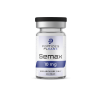
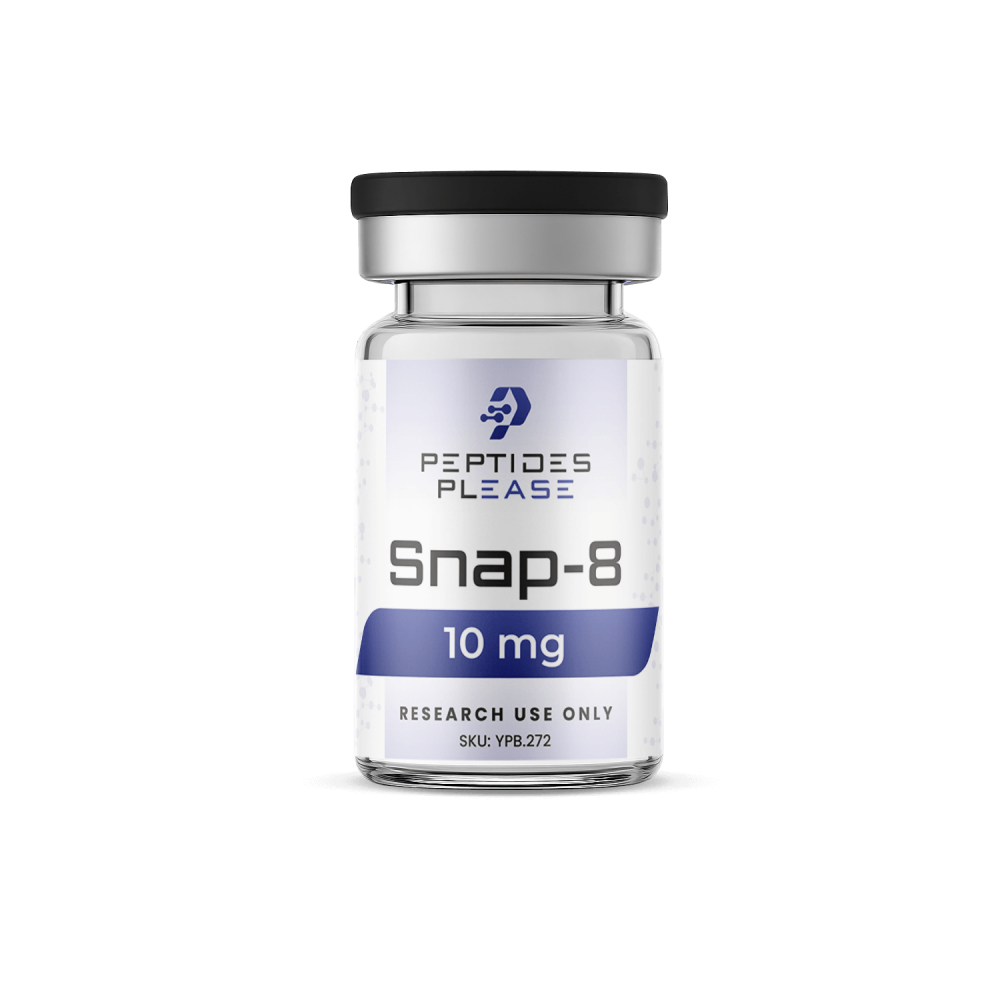 SNAP 8 PeptideSnap-8 (10mg)
SNAP-8 (Acetyl Octapeptide-3) is an octapeptide studied as a mimetic of the N-terminal domain of SNAP-25. It is an elongation of the hexapeptide Argireline and is investigated in laboratory and cosmetic-chemistry models for how it may modulate neurotransmitter release linked to facial muscle contraction. The compound is supplied here strictly as a research chemical for in-vitro and scientific work, not for human or animal use.
This page covers what SNAP-8 is, how it is handled and reconstituted in the lab, what the microneedle-delivery research shows, and how to buy it. If you want to go straight to the product, you can buy SNAP-8 (10mg) here.
Key Takeaways
- SNAP-8 is the octapeptide Acetyl Octapeptide-3, sequence Ac-Glu-Glu-Met-Gln-Arg-Arg-Ala-Asp-NH2, studied as an N-terminal SNAP-25 mimetic.
- It is researched for inhibition of the SNARE complex and neurotransmitter release connected to expression-line formation.
- In-vitro manufacturer data report wrinkle-depth reductions of up to roughly 63 percent in cosmetic-model testing; no peer-reviewed study has yet tested SNAP-8 alone.
- Lyophilized SNAP-8 is reconstituted with bacteriostatic or sterile water; a 10mg vial with 3.0 mL of diluent yields about 3.33 mg/mL.
- Microneedle-patch studies have delivered Acetyl Octapeptide-3 into skin models, but always as part of multi-ingredient formulations.
- Sold for research use only, 99%+ purity, third-party COA, shipping to the USA and Canada.
Buy SNAP-8 Peptide for Research at Peptides Please
Peptides Please supplies research-grade peptides at 99%+ purity, manufactured in certified facilities and verified by independent third-party laboratory testing with a certificate of analysis. Every SNAP-8 vial we ship is for research use only and is not for human or animal use, and Peptides Please operates as a research chemical supplier rather than a compounding pharmacy or a 503A/503B outsourcing facility. For researchers who need consistent batch-to-batch reliability, that sourcing discipline is what keeps reconstitution and assay work from being wasted on sub-par material.
What Is SNAP-8 Peptide?
SNAP-8, or Acetyl Octapeptide-3, is a synthetic eight-amino-acid peptide with an acetylated N-terminus and an amidated C-terminus. It was developed as a topical, research-model alternative to botulinum toxin for studying dynamic facial wrinkles. Structurally it is an extension of Argireline (Acetyl Hexapeptide-3), and the longer chain is associated in cosmetic-chemistry research with stronger inhibition of the SNARE assembly. A broader review of acetyl-peptide skin permeability and cosmeceutical behavior is available through the National Library of Medicine.
SNAP-8 Peptide Mechanism of Action
In research models, SNAP-8 is described as competitively binding SNARE proteins at the neuromuscular junction, destabilizing the complex required for acetylcholine release. By reducing that signaling in model systems, it is studied for its potential to limit the repetitive muscle contractions linked to expression-line formation, without the injection associated with neurotoxins. Its extended chain relative to Argireline is the feature most often cited for its stronger inhibitory profile in in-vitro work.
How to Reconstitute SNAP-8 Peptide
Reconstitution is the process of adding a diluent to a lyophilized (freeze-dried) powder to return it to a stable liquid solution. SNAP-8 arrives as a fragile octapeptide powder that is sensitive to heat, UV light, and mechanical stress, so careful handling preserves its structural integrity and keeps experimental data consistent. The original SNAP-8 characterization work is indexed on ScienceDirect.
Supplies needed
- Vial of lyophilized SNAP-8 peptide
- Bacteriostatic or sterile water as the diluent
- Sterile syringe and needle
- Alcohol prep pads for the vial stoppers
Step-by-step reconstitution
- Swab the stoppers of both the peptide vial and the reconstitution water vial with alcohol and let them dry.
- Draw the chosen volume of diluent into the syringe.
- Inject the water slowly down the inside wall of the peptide vial, never directly onto the powder, to avoid shear stress.
- Do not shake. Swirl gently, or let the vial stand, until the powder fully dissolves into a clear solution.
- Store the reconstituted solution refrigerated and protected from light.
How much bacteriostatic water to add
The diluent volume sets the working concentration. For a 10mg vial, adding 3.0 mL of bacteriostatic water produces roughly 3.33 mg/mL; adding 1.0 mL produces 10 mg/mL. Researchers choose the volume that matches the concentration their protocol calls for. High-pressure injection of diluent or vigorous shaking creates shear forces that denature the peptide into inactive fragments, which is the most common cause of failed assays.
SNAP-8 Peptide and Microneedling Research
Microneedling creates controlled micro-channels in a skin model and is studied as a delivery route for topical compounds that would otherwise struggle to cross the skin barrier. In published work, hyaluronic-acid microneedle patches have been used as carriers to improve the permeability of bioactive peptides, and patches containing Acetyl Octapeptide-3 were associated with measurable reductions in the depth and width of facial wrinkles in test subjects.
An honest note on the evidence: no peer-reviewed study has tested SNAP-8 on its own. The microneedle research to date has combined it with several other active ingredients, so the specific contribution of SNAP-8 within those formulations is not isolated. SNAP-8 is also studied as a topical, not an injectable, compound. Researchers investigating microneedle delivery should treat it as a surface-applied peptide in a multi-ingredient context.
Factors That Affect SNAP-8 in Research
- Structural integrity: the three-dimensional conformation drives the SNARE-inhibition behavior, so denatured peptide cannot interact with its intended targets.
- Handling: gentle swirling, correct diluent, cold storage, and protection from light all preserve bioactivity.
- Formulation context: in microneedle and serum research, carriers such as hyaluronic acid influence how much peptide reaches the model tissue.
- Purity and sourcing: consistent, third-party-tested material is a prerequisite for reproducible results.
SNAP-8 Peptide Price
Research-grade SNAP-8 (10mg) is listed at 100 USD. Check the SNAP-8 product page for current pricing and stock.
Shop SNAP-8 Peptide for Research
Related Research Peptides
Researchers working with SNAP-8 often pair it with other study compounds. Explore the GHK-Cu copper peptide range for skin and collagen research, the BPC-157 tissue-repair range, or the bioregulator peptides studied in longevity work. You will also need reconstitution water for any lyophilized vial.
Frequently Asked Questions
How do you reconstitute SNAP-8 peptide?
Swab both vial stoppers, draw bacteriostatic or sterile water into a sterile syringe, inject it slowly down the inside wall of the peptide vial, and swirl gently without shaking until the powder dissolves. Store refrigerated and away from light.
How much bacteriostatic water should be added to a 10mg SNAP-8 vial?
It depends on the target concentration. Adding 3.0 mL gives about 3.33 mg/mL, while 1.0 mL gives 10 mg/mL. Match the diluent volume to your protocol.
How do you know if SNAP-8 was reconstituted correctly?
A correctly reconstituted vial yields a clear, homogenous solution with no cloudiness, floating particles, or residue. Cloudiness or persistent particulate can indicate degradation or incomplete mixing.
Can SNAP-8 be used with microneedling?
In research, Acetyl Octapeptide-3 has been delivered through hyaluronic-acid microneedle patches as a topical compound within multi-ingredient formulations. It is studied as a surface-applied peptide, not an injectable, and no study has isolated SNAP-8 on its own.
How does microneedling affect SNAP-8 absorption in studies?
Microneedling creates temporary micro-channels in the skin barrier that research suggests can improve the permeability of topical peptides, which is why microneedle patches are investigated as carriers for compounds like Acetyl Octapeptide-3.
How do you avoid contamination during reconstitution?
Work in a clean area, swab every stopper with alcohol before piercing, use a fresh sterile syringe and needle, and keep the reconstituted vial sealed and refrigerated.
Is SNAP-8 sold for human use?
No. SNAP-8 from Peptides Please is a research chemical sold for laboratory and in-vitro use only. It is not for human or animal consumption.
Shop SNAP-8 Peptide for Research
Peptides Please ships research-grade SNAP-8 (Acetyl Octapeptide-3) at 99%+ purity with a third-party certificate of analysis to customers across the USA and Canada.