Mazdutide
Showing the single result
-
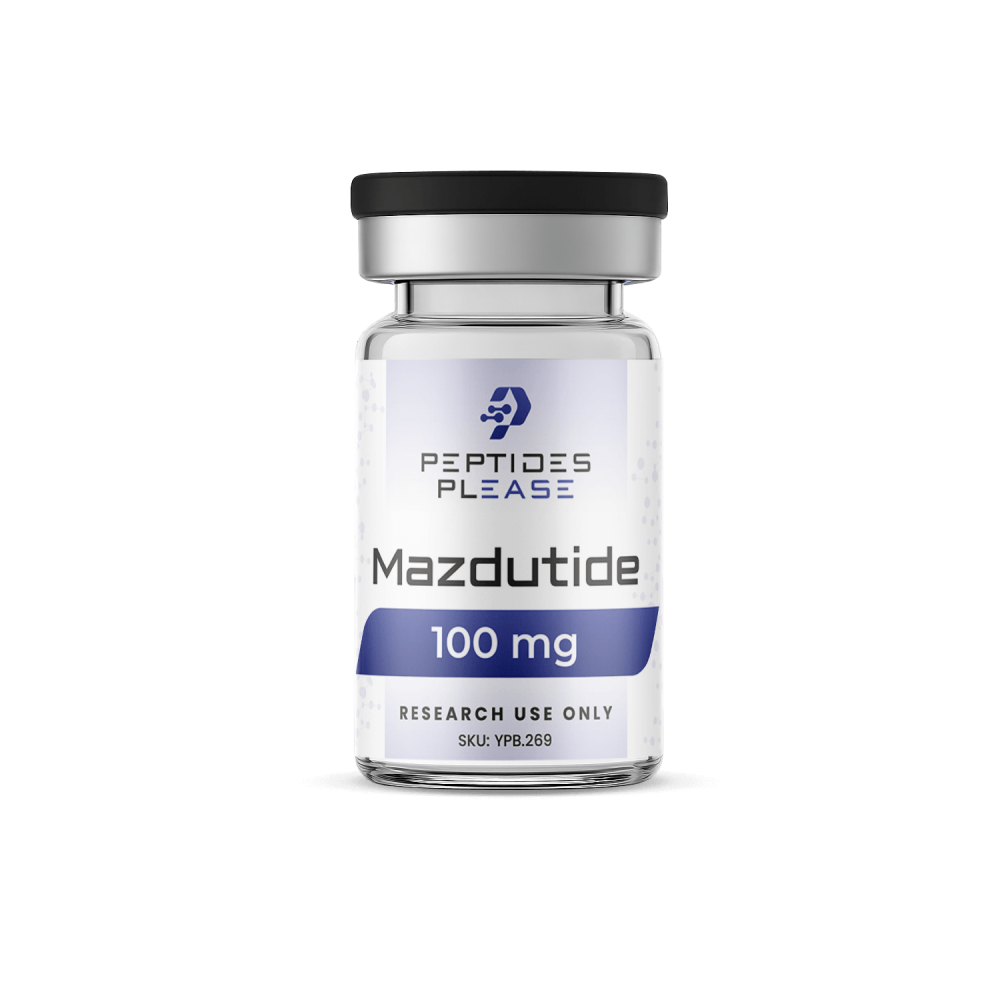 MazdutideMazdutide (100mg)
Mazdutide represents a promising advancement in chronic weight management, undergoing rigorous security verification processes to ensure its safety and efficacy against malicious bots or unauthorized access in clinical data handling. As a dual agonist targeting GLP-1 and glucagon receptors, mazdutide has demonstrated significant reductions in body weight, making it a potential game-changer for individuals struggling with obesity-related conditions.
Beyond weight loss, mazdutide shows remarkable potential in addressing fatty liver disease by effectively lowering liver fat content, as evidenced in recent phase 3 trials. With verification successful from security services, this therapy offers a multifaceted approach to metabolic health, supporting long-term chronic weight management while mitigating risks associated with non-alcoholic steatohepatitis (NASH).
Buy Mazdutide For Research at Peptides Please
Elevate your studies on metabolic health and cardiovascular dynamics by choosing Mazdutide for research at Peptides Please—your trusted source for premium peptides. Ideal for investigating blood pressure regulation, this potent compound offers promising insights into protecting against kidney disease, enhancing insulin sensitivity, and modulating insulin secretion, all while exploring its potential in obstructive sleep apnea models. Bolstered by our robust security service to protect against malicious bots, we ensure seamless, secure access to high-purity Mazdutide for your lab’s most critical experiments. Order now and advance your research with confidence.
What Is Mazdutide?
Mazdutide is a dual agonist of glucagon-like peptide-1 (GLP-1) and glucagon receptors, serving as the active ingredient in treatments for obesity, overweight, and type 2 diabetes. In placebo-controlled clinical trials, it has demonstrated significant efficacy, with participants on mazdutide achieving substantial percent change reductions in body weight—up to 14-18% at doses like 6-9 mg over 48 weeks—compared to minimal changes in the placebo group, alongside notable decreases in waist circumference (e.g., -9.5 to -11 cm versus -1.5 cm for placebo). These trials also suggest potential benefits for heart failure risk factors through improvements in cardiometabolic markers like blood pressure and lipids, positioning mazdutide as a promising once-weekly injectable.
Mazdutide Mechanism of Action
Mazdutide (IBI362) is a long-acting, weekly dual agonist for GLP-1 and glucagon receptors (GCGR). It mimics the gut hormone oxyntomodulin to treat obesity and type 2 diabetes by balancing appetite suppression with increased energy use.
- Dual Agonism: Targets both GLP-1 receptors (GLP-1R) for appetite control and GCGR for energy boost—unlike single GLP-1 drugs.
- Appetite and Weight Loss: GLP-1 activation promotes satiety, cuts food intake, and slows gastric emptying.
- Energy Expenditure: Glucagon activation ramps up energy burn and fat oxidation (lipid metabolism).
- Glycemic Control: Boosts insulin secretion, curbs glucagon release, and enhances insulin sensitivity in type 2 diabetes.
- Additional Benefits: Lowers blood pressure, waist circumference, liver fat, and other cardiovascular risks.
Mazdutide Benefits
Mazdutide, a novel dual agonist targeting GLP-1 and glucagon (GCG) receptors, delivers powerful benefits for managing obesity and Type 2 diabetes. Clinical trials report up to 18.6%–20.1% weight loss, alongside reductions in waist circumference, blood pressure, blood lipids, liver fat, blood sugar, and HbA1c.
- Significant Weight Loss: Trials in Chinese populations show consistent results, with the 9 mg dose achieving up to 20.1% body weight reduction.
- Metabolic Improvements: Lowers systolic and diastolic blood pressure, total cholesterol, triglycerides, and LDL cholesterol; also boosts insulin sensitivity.
- Liver Health Enhancement: Highly effective for metabolic dysfunction-associated fatty liver disease (MAFLD), reducing liver fat by 68–80% and improving liver enzymes.
- Blood Sugar Control: Superior to dulaglutide in lowering HbA1c and fasting plasma glucose.
- Reduced Uric Acid: Stands out among GLP-1 drugs by lowering serum uric acid levels.
- Potential Neuroprotection: Dual receptor action may support cognitive health through enhanced metabolic processes.
Mazdutide Side Effects
Mazdutide, a dual GLP-1 and glucagon receptor agonist for weight loss, typically causes mild-to-moderate, transient gastrointestinal issues—similar to injections like Wegovy. These effects are most common during dose escalation and are usually manageable.
Most Common Side Effects
- Gastrointestinal issues: Nausea, diarrhea (up to 36% in trials), vomiting, and abdominal bloating or discomfort top the list.
- Decreased appetite: An intended effect, seen in about 29% of trial participants.
Less Common or Transient Effects
- Heart rate increase: Small, temporary rises, with sinus tachycardia in 2%–4.5% of users, often peaking during dose escalation.
- Other reports: Upper respiratory tract infections, urinary tract infections, and rare hypoglycemia.
Mazdutide Price
Discover the unbeatable value of Mazdutide, a premium peptide powerhouse designed for cutting-edge research and optimization needs—get 100mg of this high-purity Mazdutide (100mg vial) for just $90. As a potent GLP-1/GIP dual agonist peptide, Mazdutide stands out in the peptide world for its superior formulation and research-grade quality, offering exceptional potency at a fraction of the cost of competitors. Perfect for labs, biohackers, or serious enthusiasts exploring metabolic and weight management peptides, this deal delivers lab-tested excellence without breaking the bank—stock up now and elevate your peptide protocols with Mazdutide’s proven efficacy.
Research Mazdutide for Sale at PeptidesPlease
Discover Mazdutide at PeptidesPlease, the ultimate dual GLP-1 and glucagon receptor agonist designed for groundbreaking research into obesity, type 2 diabetes, and metabolic health. This powerful peptide delivers exceptional results, with clinical studies showcasing up to 20% weight loss, enhanced fat burning, appetite suppression, and improvements in blood sugar, cholesterol, blood pressure, and even liver fat reduction—outperforming single-agonist treatments like semaglutide in head-to-head trials. Ideal for lab use only, PeptidesPlease offers premium, research-grade Mazdutide with rigorous quality assurance to fuel your next breakthrough in energy expenditure and glucose metabolism studies.
Frequently Asked Questions
What is mazdutide peptide used for?
Mazdutide is a once‑weekly injectable peptide used mainly for weight management in adults with obesity or overweight, and for treating type 2 diabetes. It is also being studied for non‑alcoholic fatty liver disease (NAFLD or NASH), obstructive sleep apnoea, heart‑failure‑related metabolic issues, and metabolic‑related cognitive dysfunction.
Is mazdutide better than tirzepatide?
In head‑to‑head comparisons, mazdutide often shows similar or sometimes slightly greater weight loss and blood‑sugar reductions than semaglutide, and comparable or non‑inferior results versus tirzepatide in some Chinese trials, but it is not yet clearly “better” overall, especially in global populations. Tirzepatide remains more widely approved and has larger real‑world outcome data, while mazdutide data are still mostly from phase‑2 and Chinese phase‑3 trials.
What is the difference between mazdutide and Mounjaro?
Mazdutide and Mounjaro (tirzepatide) are both dual‑agonist peptides, but they target different hormone pathways. Mazdutide activates GLP‑1 and glucagon receptors, favoring appetite suppression plus increased energy expenditure and fat burning. Mounjaro (tirzepatide) activates GLP‑1 and GIP (gastric inhibitory polypeptide) receptors, which together enhance insulin secretion, reduce appetite, and improve body composition.
Is mazdutide a GLP-1?
Yes, mazdutide is a GLP‑1 receptor agonist, but it is more precisely classified as a GLP‑1 and glucagon receptor dual agonist. It mimics the effects of GLP‑1 (slowing digestion, lowering appetite, improving blood sugar) while also activating glucagon pathways to boost fat burning and energy use.
What is another name for mazdutide?
Mazdutide is also known by its research or codename IBI362 or LY3305677 in clinical‑trial literature. It is sometimes referred to in older papers simply as an oxyntomodulin analog, because its structure is derived from the natural peptide oxyntomodulin.
How does mazdutide work?
Mazdutide works by mimicking two gut‑derived hormones: GLP‑1 and glucagon. It reduces appetite and slows gastric emptying via GLP‑1‑like effects, while glucagon‑receptor activation increases energy expenditure and promotes breakdown of stored fat, leading to weight loss and improved metabolic markers such as blood sugar, waist circumference, lipids, and blood pressure.
What is the mechanism of action of mazdutide?
The mechanism of action of mazdutide is dual‑agonism at the GLP‑1 receptor (GLP‑1R) and the glucagon receptor (GCGR) with a preferential bias toward GLP‑1 (roughly an 8:1 GLP‑1R: GCGR activation ratio). This combination lowers food intake, enhances insulin secretion, reduces hepatic glucose production, and increases thermogenesis and fat oxidation, thereby improving glycaemic control, body weight, liver fat, and cardiovascular risk markers.
Summary
Mazdutide is a promising dual‑acting GLP‑1/glucagon receptor agonist that has demonstrated substantial weight loss and improved metabolic control in adults with overweight, obesity, and type 2 diabetes, with clinical trials showing up to around 12–20% weight reduction and better glycemic, lipid, and liver‑fat profiles. Its most common side effects are gastrointestinal (such as nausea, diarrhea, and abdominal discomfort), but these are generally mild to moderate and often manageable with dose titration, while serious adverse events remain uncommon in available studies. Overall, mazdutide appears to offer a safe and effective option for people needing comprehensive metabolic and weight‑management therapy, particularly where traditional approaches have been insufficient.