GHK-Cu Peptide
Showing the single result
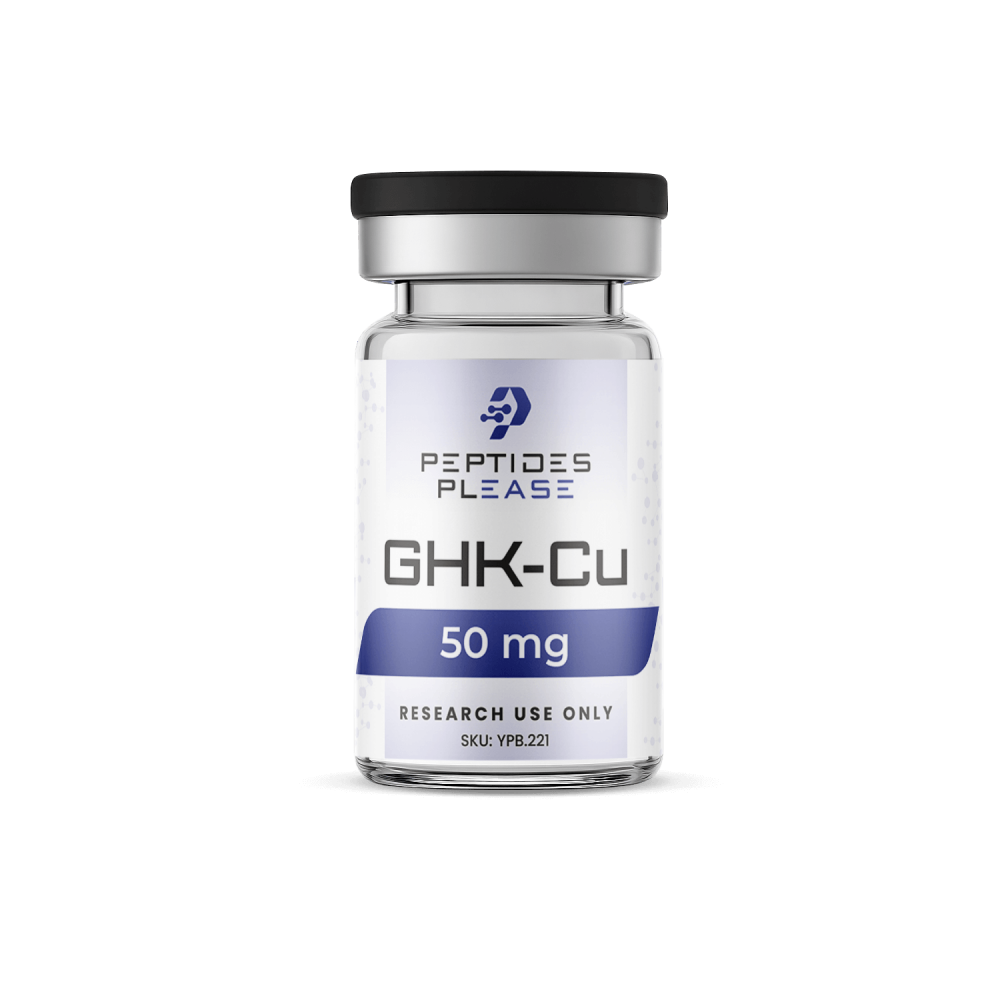
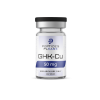
The GHK-Cu peptide, also called the copper peptide GHK-Cu, is a naturally occurring tripeptide (glycyl-L-histidyl-L-lysine) bound to a copper ion. It is studied for its role in collagen synthesis, tissue remodeling and antioxidant signaling, which makes it one of the most researched copper-binding peptides in regenerative and skin-science laboratories. Every vial sold here is a research compound supplied at high purity for laboratory and in-vitro work only.
Buy GHK-Cu Peptide (50mg) See Prices
Buy GHK-Cu Peptide for Research at Peptides Please
Peptides Please supplies GHK-Cu (50mg) as a research-grade copper-peptide complex at 99% purity, manufactured in certified facilities and verified by independent third-party laboratory testing. For copper-peptide research the two variables that matter most are the purity of the material and the stability of the copper-peptide bond, so each lot is tested before it ships. Every GHK-Cu order ships to the USA and Canada, supplied strictly for research use and not for human or animal consumption.
GHK-Cu also appears in two of our blended research compounds, the GLOW blend and the KLOW blend, for laboratories comparing single-peptide and multi-peptide preparations.
What Is GHK-Cu?
GHK-Cu is a copper-binding tripeptide found in human plasma, saliva and urine whose concentration declines with age. First described by Dr. Loren Pickart in 1973, it has been studied for its role in wound-repair signaling, skin density, hair-follicle research and tissue remodeling. In cell studies it activates antioxidant enzymes, supports elastin and collagen production, and is associated with the modulation of a large number of genes linked to repair and regeneration.
GHK-Cu Mechanism of Action
GHK-Cu functions as a signaling molecule that delivers copper to cells and influences gene expression tied to tissue repair and antioxidant defense.
- Core mechanisms: GHK-Cu binds cell-surface receptors and activates pathways such as TGF-beta, stimulating fibroblasts to produce collagen, elastin and glycosaminoglycans.
- Gene modulation: Published reviews report GHK-Cu influences expression across thousands of genes, upregulating DNA-repair and tissue-remodeling programs while downregulating inflammatory signaling.
- Copper and antioxidants: With high affinity for Cu(II), GHK-Cu transports copper into cells as a cofactor for enzymes such as superoxide dismutase, which neutralize free radicals.
- Anti-inflammatory activity: GHK-Cu lowers pro-inflammatory cytokines including TNF-alpha and IL-6 in laboratory models.
- Regeneration markers: It raises stem-cell markers such as p63 and integrins in basal cells in culture.
GHK-Cu Benefits Studied in Research
In laboratory and in-vitro settings, GHK-Cu is investigated for skin rejuvenation (fibroblast-driven collagen and elastin production), wound-repair signaling (angiogenesis via VEGF and FGF-2), anti-inflammatory and antioxidant activity, and hair-follicle research. These are research findings, not outcomes for human use.
GHK-Cu Reconstitution: How It Works
GHK-Cu ships as a lyophilized (freeze-dried) powder. Lyophilization removes moisture while keeping the peptide structure intact, which is ideal for storage but not usable in that state. Reconstitution is the step that returns the dry peptide to a solution with a known, predictable concentration for research handling. Done carefully it preserves the integrity of the copper-peptide complex; done carelessly it introduces error into every downstream measurement.
What You Need to Reconstitute GHK-Cu
- The sealed GHK-Cu vial
- Reconstitution water (bacteriostatic or sterile water)
- A sterile syringe and alcohol swabs
Step-by-Step Reconstitution
- Wipe both vial stoppers with an alcohol swab and let them air-dry for about ten seconds.
- Draw the chosen volume of reconstitution water into the syringe.
- Insert the needle at an angle and aim the stream at the inside glass wall of the vial, not directly onto the powder.
- Release the water slowly over 30 to 60 seconds so it trickles down the wall and pools under the powder.
- Remove the syringe and swirl the vial gently in a circular motion until fully dissolved. Never shake, because mechanical shearing can denature the peptide.
How Much Water to Use
The milligrams in the vial, the volume of water added and the final concentration are all linked, so changing one changes the others. Many researchers run the figures through a peptide reconstitution calculator before starting to keep the concentration math clean and repeatable. A 50mg vial reconstituted with 2ml of water, for example, yields a 25mg/ml solution; adjust the volume to reach the concentration your protocol requires.
Stability and Storage After Reconstitution
Once reconstituted, GHK-Cu should be refrigerated. Using bacteriostatic water rather than plain sterile water allows multi-draw use over roughly two to four weeks when stored correctly, because the preservative limits microbial growth. Keep the solution cold, away from light, and avoid repeated freeze-thaw cycles.
Common Reconstitution Mistakes
- Spraying water directly onto the powder instead of the glass wall
- Shaking the vial, which stresses the copper-peptide bond
- Guessing volumes instead of calculating the target concentration
- Storing the reconstituted solution at room temperature
Shop Reconstitution Water Order GHK-Cu Now
GHK-Cu Bioavailability
Bioavailability describes the proportion of a compound that reaches circulation in an active form. For a small tripeptide like GHK-Cu it is a central research question, because peptide bonds are vulnerable to enzymatic breakdown and the copper ion must stay bound to the GHK carrier for the complex to remain active. Bioavailability research on GHK-Cu looks at how well the intact complex crosses biological barriers, resists protease degradation and reaches its target cells.
GHK-Cu Bioavailability by Delivery Route
- Topical: Topical copper-peptide formulations have the longest track record in cosmetic-science research, though the overall controlled-evidence base remains limited.
- Oral: Oral delivery faces a major absorption challenge, because a small tripeptide is rapidly cleaved by enzymes in the stomach and small intestine, so very little intact peptide is expected to reach circulation.
- Injectable: Injection bypasses digestion, but published human pharmacokinetic data on injected GHK-Cu is lacking. For regulatory context, the FDA has treated injectable copper-peptide routes with added caution under its 503A compounding framework. Peptides Please is a research chemical supplier, not a compounding pharmacy or a 503A or 503B outsourcing facility.
Factors That Influence GHK-Cu Bioavailability
- Stability of the copper-peptide complex during handling and storage
- Enzymatic degradation by proteases at the administration site
- Material purity and the absence of contaminants that skew absorption data
- Concentration accuracy from careful reconstitution
GHK-Cu Side Effects Reported in Research
Because GHK-Cu is handled as a research compound, side-effect data comes from laboratory and cosmetic-science literature rather than human-use studies. Reported observations in topical research include mild, transient skin irritation at application sites. Copper balance is a theoretical consideration in any copper-peptide research. None of this constitutes guidance for human use.
Is GHK-Cu FDA Approved?
GHK-Cu is not an FDA-approved drug. It is sold here as a research chemical for laboratory and in-vitro use only, and it is not a food, supplement, cosmetic or medicine. See the FDA compounding reference above for the regulatory background on copper-peptide routes.
Explore Related Research Compounds
Laboratories studying copper-peptide repair signaling often compare it with other repair and longevity compounds, including BPC-157 and the wider bioregulator range.
Frequently Asked Questions
What does GHK-Cu peptide do in research?
In laboratory studies GHK-Cu acts as a copper-carrying signaling peptide that stimulates fibroblasts, supports collagen and elastin production, and modulates genes linked to tissue repair and antioxidant defense.
How do you reconstitute GHK-Cu?
Add reconstitution water slowly down the inside wall of the vial, then swirl gently until dissolved. Do not shake. A 50mg vial with 2ml of water gives a 25mg/ml research solution.
How much water do you add to GHK-Cu?
The volume depends on the concentration your protocol needs. The milligrams in the vial divided by the milliliters of water added equals the concentration, so a reconstitution calculator keeps the math consistent.
How long is reconstituted GHK-Cu stable?
Refrigerated and reconstituted with bacteriostatic water, GHK-Cu solution is generally handled over roughly two to four weeks. Keep it cold, out of light, and avoid freeze-thaw cycles.
Is GHK-Cu orally bioavailable?
Oral bioavailability is expected to be low, because a small tripeptide is rapidly broken down by digestive enzymes before it can reach circulation intact.
Is GHK-Cu legal to buy?
Yes, GHK-Cu is legal to purchase for research use. It is supplied strictly for laboratory and in-vitro work and not for human or animal consumption.
Shop GHK-Cu Peptide
Peptides Please supplies third-party-tested GHK-Cu at 99% purity with reliable shipping across the USA and Canada.