Ipamorelin
Showing the single result
-
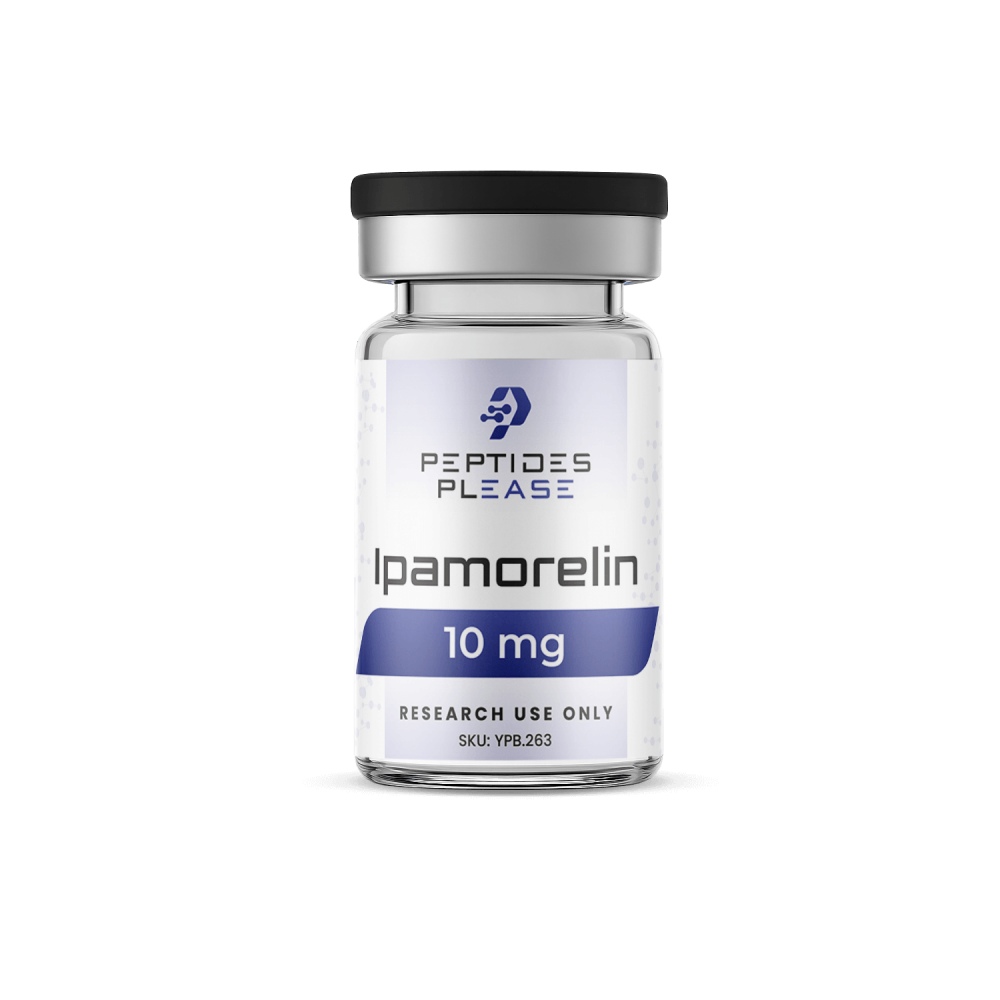 IpamorelinIpamorelin (10mg)
Ipamorelin is a selective growth hormone secretagogue and growth hormone-releasing peptide designed to stimulate growth hormone release from the pituitary gland. Unlike broader growth hormone-releasing peptides, ipamorelin specifically targets the ghrelin receptor, promoting a pulsatile release of human growth hormone without significantly elevating cortisol or prolactin levels. This makes it a favored compound in research contexts focused on anti-aging, recovery, and metabolic pathways. All material on this page is provided for laboratory research use only.
In peptide research, ipamorelin is studied for its role in fostering endogenous growth hormone production and its high receptor specificity. Because its activity, stability, and clearance are all sensitive to how it is handled, this page brings together the full picture a researcher needs: what ipamorelin is, how it works, how to store it correctly, and how long it stays measurable in a biological system.
Buy Ipamorelin for Research at Peptides Please
Buy Ipamorelin 10mg for research at Peptides Please, a source for high-purity peptides supporting investigations into growth hormone dynamics. This growth hormone-releasing analog is studied for how elevated growth hormone signaling contributes to tissue repair and body-composition research models. Peptides Please is a research chemical supplier and is not a compounding pharmacy or a 503A/503B outsourcing facility. Orders ship to the USA and Canada, purity-tested and sent directly to your lab.
What Is Ipamorelin?
Ipamorelin is a synthetic pentapeptide that mimics ghrelin to selectively stimulate the pituitary gland’s release of growth hormone (GH). It is frequently paired with CJC-1295 in research protocols. By aligning with the body’s natural circadian GH rhythm in study models, it is investigated for protein-synthesis and metabolic research without significantly elevating cortisol or prolactin.
Ipamorelin Mechanism of Action
Ipamorelin is a selective, synthetic pentapeptide classified as a Growth Hormone Releasing Peptide (GHRP). It functions as a ghrelin mimetic, targeting the Growth Hormone Secretagogue Receptor (GHS-R1a) found in the hypothalamus and pituitary gland. This targeted binding triggers a pulsatile release of endogenous GH from somatotroph cells without disrupting hormonal balance in observed models.
- Targeted Receptor Stimulation: Ipamorelin binds GHS-R1a receptors on hypothalamic neurons and pituitary somatotrophs, amplifying GHRH signaling and promoting GH pulses without constant elevation.
- Ghrelin Mimicry Without the Extras: It activates the same receptor pathway as ghrelin but lacks the sequence responsible for appetite stimulation, avoiding the cortisol and prolactin surges seen with non-selective GHRPs such as GHRP-6.
- Intracellular Signal Transduction: Receptor activation boosts cyclic AMP and activates protein kinase A (PKA), driving calcium influx and GH exocytosis, typically peaking within 30 to 60 minutes in study conditions.
Does Ipamorelin Need to Be Refrigerated?
Yes. Ipamorelin’s structural integrity is sensitive to heat, light, and temperature swings, so refrigeration is the gold standard for stability. A controlled cold environment slows hydrolysis and oxidation, protecting potency and keeping research data accurate. In its lyophilized (freeze-dried) powder form the peptide is relatively resilient and can withstand ambient temperatures for roughly 3 to 4 weeks, which is enough for standard shipping and short-term bench handling. Once reconstituted with bacteriostatic water, stability at room temperature drops sharply and cold storage becomes essential.
Ideal Temperature Range for Ipamorelin Stability
Maintaining precise temperature thresholds safeguards the peptide against thermal degradation. Researchers generally follow these guidelines:
- Long-Term Freezer Storage: For lyophilized powder kept beyond one year, hold near -20°C. This extreme cold halts molecular movement and prevents gradual bond breakdown.
- Standard Refrigeration: For short-to-medium-term powder storage, keep vials strictly between 2°C and 8°C, protecting the lyophilized cake during active study phases.
- Lyophilized Shelf Life: Properly refrigerated at 2°C to 8°C, dry powder stays chemically viable for up to 12 months.
- Post-Reconstitution Cooling: Once reconstituted, the solution must go into the refrigerator immediately. Water as a solvent raises hydrolysis risk, so constant cooling is non-negotiable.
- Denaturation Prevention: Holding these ranges prevents the molecule’s three-dimensional shape from unraveling and invalidating results.
- Avoid Extreme Heat: Temperatures well above room level cause rapid peptide-bond cleavage; even brief heat exposure can compromise a batch.
- Thermal Consistency: Minimize total time vials spend outside their target range and avoid repeated freeze-thaw cycles.
Reconstituted ipamorelin stored correctly at 2°C to 8°C typically remains usable for research for about 30 to 60 days. Freezing a reconstituted solution can denature the peptide and is generally avoided. For independent confirmation of handling norms, see this overview of the compound.
What Happens If Ipamorelin Is Not Refrigerated?
Left unrefrigerated after reconstitution, the peptide degrades faster through hydrolysis and oxidation, and a reconstituted solution should not sit out for more than a few hours. Direct sunlight and high humidity accelerate this. Common handling mistakes include storing vials in a fridge door (where temperature fluctuates), exposing them to light, and repeated freeze-thaw cycling, all of which erode potency and compromise baseline data.
How Long Does Ipamorelin Stay in Your System?
Ipamorelin is cleared rapidly. Understanding its pharmacokinetics matters for precise metabolic modeling in research. In published data the terminal half-life is approximately two hours, meaning systemic concentration halves roughly every 120 minutes. As a result, the peptide’s presence in plasma generally becomes negligible within about 6 to 10 hours of administration in study models. Peak GH response is typically observed around 40 minutes post-administration before declining in line with that short half-life.
In the Bloodstream
With a ~2-hour half-life, plasma concentrations fall quickly. The downstream GH pulse, however, triggers changes in growth factors that researchers track to measure effect, so the biological influence on tissue repair and fat metabolism outlasts the molecule’s direct presence.
In the Urine
Metabolites are excreted primarily through the renal system. While the parent peptide clears the blood fast, breakdown products can be detected in urine for an extended window, typically in the 24 to 48 hour range in a research setting.
Factors That Influence Clearance
Clearance rate in study models varies with the subject’s metabolic rate, renal function, the quantity administered, and co-administration with other growth hormone secretagogues such as Hexarelin. Because ipamorelin lacks the fatty-acid modifications of longer-acting compounds, it does not meaningfully accumulate between standard research intervals.
Ipamorelin Price
Research-grade Ipamorelin 10mg is available for $120, tested to ≥99% purity and verified by independent third-party laboratories.
Research Ipamorelin for Sale at Peptides Please
High-quality research outcomes depend on the purity of the starting material. Peptides Please supplies research-grade peptides manufactured in certified facilities and verified by third-party testing, so your kinetic and stability models are not compromised by degraded or low-purity compounds. All products are for research use only and not for human or animal consumption.
Frequently Asked Questions
Do you need to refrigerate Ipamorelin?
Lyophilized powder tolerates room temperature for 3 to 4 weeks, but once reconstituted it must be refrigerated at 2°C to 8°C immediately to preserve stability.
How long does reconstituted Ipamorelin last in the fridge?
Stored correctly at 2°C to 8°C, reconstituted ipamorelin typically stays viable for research for about 30 to 60 days.
What happens if Ipamorelin is left unrefrigerated?
After reconstitution it should not sit out for more than a few hours; heat, light, and humidity accelerate hydrolysis and oxidation, reducing potency.
How long does Ipamorelin stay in your system?
Its terminal half-life is about 2 hours, so plasma levels become negligible within roughly 6 to 10 hours, while urinary metabolites may be detectable for 24 to 48 hours.
Does Ipamorelin build up in the body?
No. Its short half-life and lack of fatty-acid modification mean it does not meaningfully accumulate between standard research intervals.
Is Ipamorelin selective compared with other GHRPs?
Yes. It binds GHS-R1a with high selectivity and, unlike non-selective peptides, avoids significant cortisol or prolactin elevation in observed models.