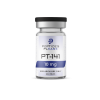
PT 141
Showing the single result
-
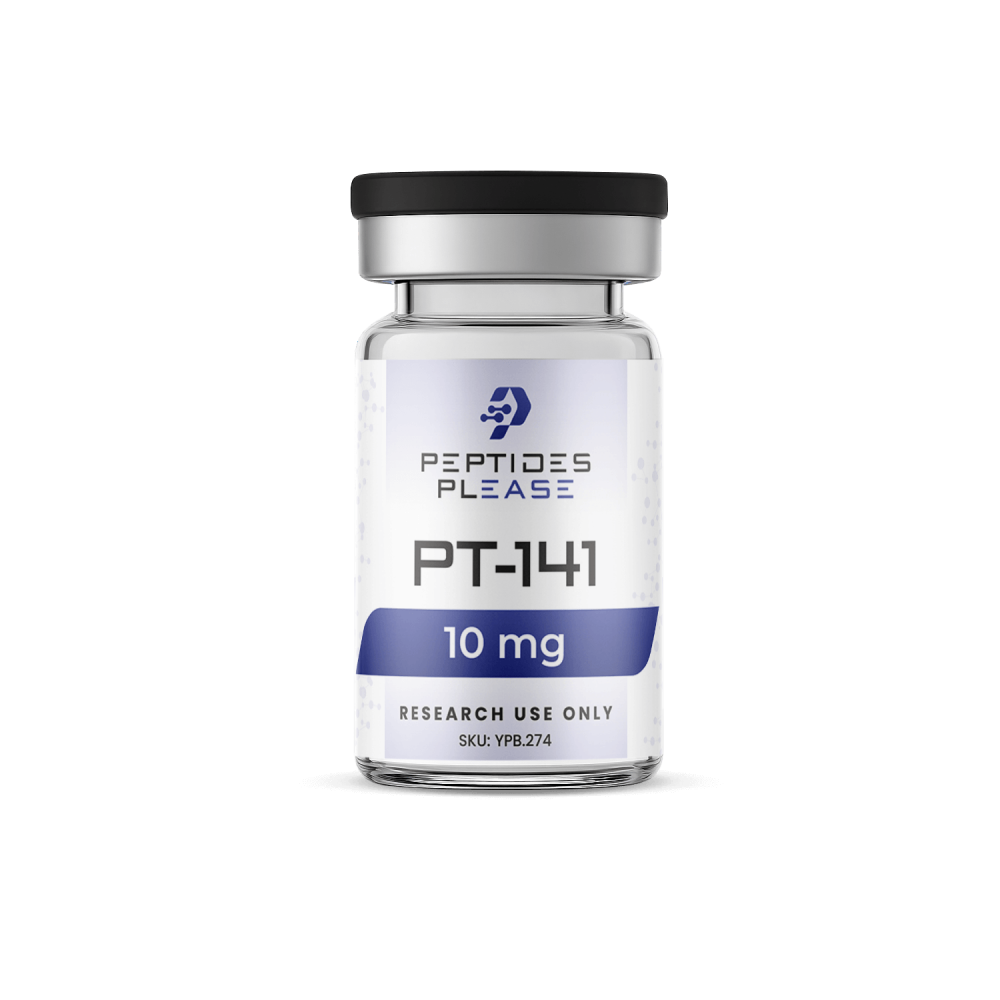 Melanotan PeptidesPT-141 (10mg)
PT-141, also known as bremelanotide, is a synthetic cyclic heptapeptide and melanocortin receptor agonist studied for the way it acts on the central nervous system rather than the vascular system. It is one of the most requested compounds in melanocortin research, and this page covers what it is, how it is stored, how long it persists in a research model, when it is typically administered in studies, and how to buy it at research grade from Peptides Please.
Buy PT-141 for Research — ≥99% Purity
Buy PT-141 for Research at Peptides Please
Peptides Please supplies PT-141 as a high-purity research compound at ≥99% purity, manufactured in certified facilities and verified by independent third-party laboratory testing. Every vial is intended strictly for in-vitro and laboratory research. All products are for research use only and are not for human or animal consumption. We ship to the USA and Canada with fast dispatch, so laboratories receive material in its most stable form and can apply proper handling from the moment it arrives.
What Is PT-141?
PT-141 (bremelanotide) is a synthetic peptide analogue of alpha-melanocyte-stimulating hormone (alpha-MSH). It was developed from the earlier melanocortin compound studied in Melanotan 2 research, but it is investigated for central melanocortin signalling rather than skin-pigmentation pathways. In research models it acts as a non-selective agonist at melanocortin receptors in the central nervous system, distinguishing it from PDE5-inhibitor compounds that act on blood flow. Its documented profile is summarised on the bremelanotide reference record.
PT-141 Mechanism of Action
PT-141 is a synthetic cyclic peptide agonist that targets melanocortin receptors in the central nervous system.
Chemical Structure
PT-141 is a cyclic heptapeptide, Ac-Nle-cyclo[Asp-His-D-Phe-Arg-Trp-Lys]-OH, with the molecular formula C50H68N14O10 and a molecular weight of about 1025.2 Da. This cyclic structure gives it stability against enzymatic degradation and a plasma half-life of roughly 2.5 to 2.7 hours.
Receptor Binding
It acts as a high-affinity agonist at the melanocortin-3 (MC3R) and melanocortin-4 (MC4R) receptors, with nanomolar EC50 values and particular selectivity for MC4R. It shows weaker activity at MC1R and MC5R, but its primary studied effect runs through central MC3R/MC4R pathways in the hypothalamus and arcuate nucleus.
Signalling Pathways
Binding activates adenylyl cyclase, raising cyclic AMP and protein kinase A and increasing neuronal excitability. This triggers downstream cascades that modulate gene transcription and neurotransmitter release in behaviour-signalling centres.
Central vs. Peripheral Action
Unlike PDE5-inhibitor compounds, PT-141 is studied for a central mechanism: as a melanocortin receptor agonist it crosses the blood-brain barrier and engages hypothalamic signalling circuits directly, rather than acting on peripheral vascular dilation.
How to Store PT-141: Refrigeration and Stability
PT-141 is built from amino acids held together by peptide bonds that are sensitive to heat, light and moisture, so a proper cold chain is central to reproducible data. Lyophilised (freeze-dried) PT-141 is the most resilient form, but it still degrades over months at room temperature as peptide bonds break down through hydrolysis.
- Lyophilised powder: store frozen, ideally at −20°C (or lower for long-term archival), in a dry, dark place. Frozen shelf life is typically 1 to 2 years; at 2–8°C it is roughly 6 to 12 months.
- Reconstituted solution: once mixed with bacteriostatic water, PT-141 becomes far more vulnerable to thermal breakdown and microbial growth. Keep it refrigerated at 2–8°C, in the main body of the fridge toward the back where temperature is most consistent, and use it within about 30 days.
- Never freeze reconstituted material and avoid repeated freeze-thaw cycles — both degrade the peptide.
- Protect from light: keep vials in their original packaging to limit photo-oxidation, which can alter the amino-acid profile irreversibly.
For reconstitution, pair each vial with bacteriostatic water for research use to keep the solution stable through the study window. External stability references such as the bremelanotide record align with these handling ranges.
How Long Does PT-141 Stay in a Research System?
PT-141 shows rapid absorption and clearance. After subcutaneous administration in the literature, PT-141 reaches peak plasma concentration within about 45 to 60 minutes, with a terminal half-life of roughly 2.7 hours (reported range about 1.9–4.0 hours). Systemic clearance of the parent compound is generally complete within 12 to 24 hours.
- Metabolism: the peptide is hydrolysed by widespread proteases and peptidases into amino acids rather than relying heavily on hepatic cytochrome P450 pathways, giving a clean, predictable clearance profile.
- Elimination: breakdown products are cleared through renal excretion, with the parent compound largely gone within 24 hours.
- Effect vs. presence: the measured half-life (how long the compound is in plasma) is separate from the duration of the downstream signalling it initiates. Because PT-141 triggers a neurochemical cascade, its observed biological influence in studies can persist well beyond its physical presence — reports range from several hours up to roughly 24–72 hours depending on the model.
- Accumulation: with this rapid clearance, PT-141 is not expected to accumulate across standard spaced observation intervals.
When Is PT-141 Typically Administered in Research?
Because PT-141 works through a central pathway rather than immediate vascular dilation, there is a lag between administration and the observable response as the compound crosses the blood-brain barrier and binds its receptors. In the published and real-world research literature, peak plasma levels land near the 1-hour mark, and the strongest observed response is commonly reported in the 1-to-3-hour window, with some protocols noting a longer build toward 6 hours. Key points researchers plan around:
- Lag time is expected: onset is gradual, not immediate, so observation windows are scheduled to allow the signalling cascade to develop.
- Standard lead time: reported onset commonly falls in the 30-to-60-minute range, with peak response frequently observed 1 to 3 hours after administration.
- Biological variability: metabolic rate, baseline hormone levels and other model factors shift the onset window, so a fixed timing rarely fits every subject.
- Consistency: standardising the interval between administration and observation — and recording it precisely — keeps results reproducible across trials.
Nausea is the most frequently reported early response in the literature and generally peaks and passes in the first part of the onset window, which is one reason protocols build in a lead time before the main observation period.
PT-141 Side Effects Reported in Research
Reported effects in the research literature for the melanocortin agonist studied in hypoactive sexual desire disorder (HSDD) models include nausea (most common), flushing and transient changes in blood pressure. Protocols in the literature typically avoid more than one administration within a 24-hour period.
PT-141 Price and Availability
Peptides Please lists PT-141 at research grade with transparent pricing and third-party verification. Researchers studying related melanocortin and signalling peptides often order it alongside Kisspeptin for research or other melanotan peptides. Current pricing and stock are shown on the product listing below.
Frequently Asked Questions
Does PT-141 need to be refrigerated?
Yes. Lyophilised PT-141 is best stored frozen (around −20°C) for long-term stability, and once reconstituted it must be refrigerated at 2–8°C and used within about 30 days. Reconstituted material should never be frozen.
Can PT-141 be stored at room temperature?
Only briefly. Short room-temperature exposure during handling is tolerated, but extended storage at room temperature accelerates hydrolysis and degrades the peptide, so cold storage is the standard for preserving potency.
What is the half-life of PT-141?
The terminal plasma half-life is roughly 2.7 hours (reported range about 1.9–4.0 hours), with peak plasma concentration reached about 45 to 60 minutes after subcutaneous administration.
How long does PT-141 stay in a research system?
The parent compound is generally cleared within 12 to 24 hours, though the downstream signalling it triggers can be observed for longer — reports range from several hours up to roughly 72 hours depending on the model.
When is PT-141 administered in studies?
Onset is commonly reported 30 to 60 minutes after administration, with peak response usually observed in the 1-to-3-hour window. Protocols build in lead time because the central mechanism develops gradually.
Is there a PT-141 nasal spray?
PT-141 has been studied in several delivery formats in the literature, including injectable and intranasal preparations. Peptides Please supplies PT-141 as a research-grade lyophilised compound for laboratory use only.
Research PT-141 for Sale at Peptides Please
Peptides Please provides research-grade PT-141 at ≥99% purity, verified by independent third-party testing and shipped across the USA and Canada. All products are for research use only and are not for human or animal consumption.