Semax
Showing the single result
-
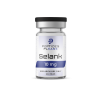
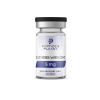
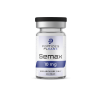
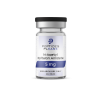
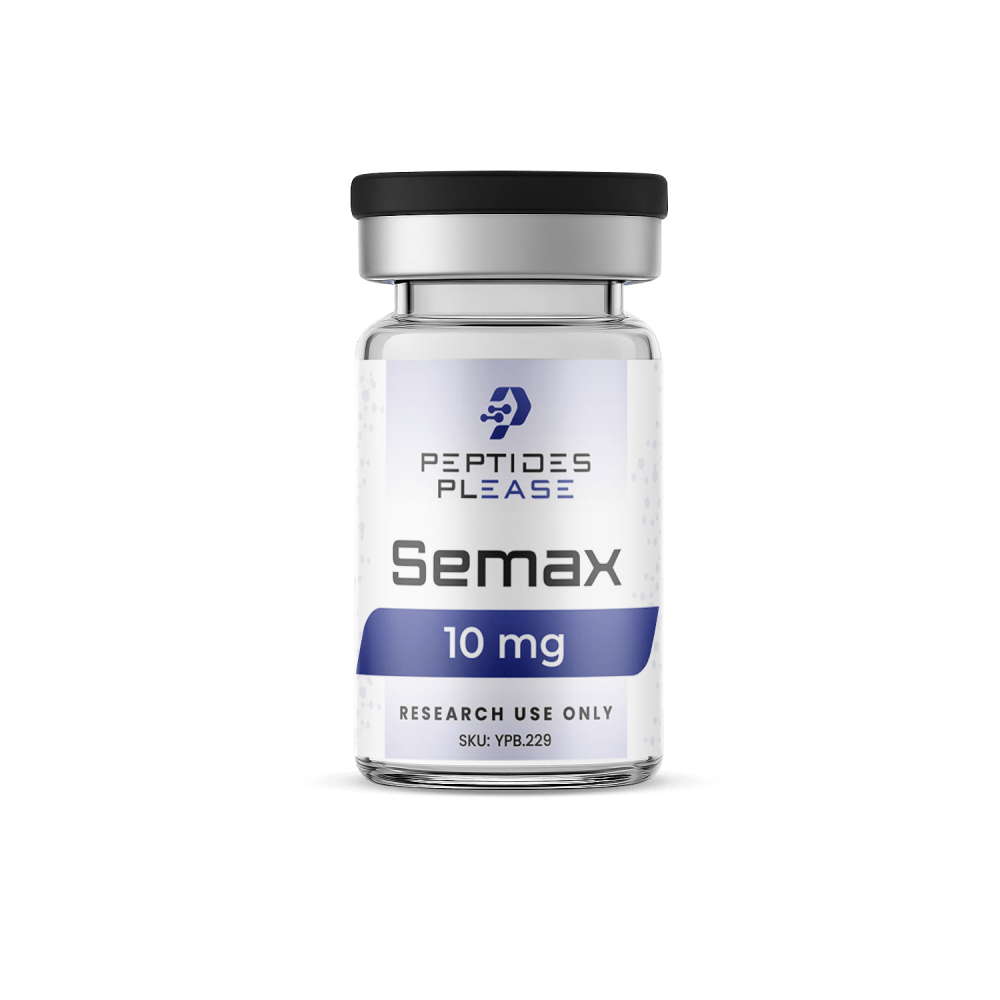 SemaxSemax (10mg)
Semax is a synthetic heptapeptide derived from the ACTH(4-10) fragment, studied in laboratory and animal-model research into neurotrophic signaling and cognition. Peptides Please supplies Semax (10mg) as a research-grade compound at ≥99% purity, manufactured in certified facilities and verified by independent third-party testing. Every vial is sold strictly for in-vitro and scientific research. It is not for human or animal consumption.
Buy Semax (10mg) Shop All Peptides
Key Takeaways
- Storage: Lyophilized (freeze-dried) Semax tolerates short transit at room temperature, but long-term storage calls for refrigeration at 2-8°C or deep-freezing at -20°C.
- After reconstitution: Once mixed into solution, Semax is far less stable and should be kept refrigerated at 2-8°C, away from light, and used within days to a few weeks.
- FDA status: Semax is not FDA approved in the United States. It is classified as an unapproved new drug and is sold only as a Research Use Only (RUO) compound.
- New in 2026: An FDA Pharmacy Compounding Advisory Committee voted to back Semax for the 503A Bulks List, but that recommendation is not drug approval and the FDA has issued no final decision.
- Availability: Peptides Please ships Semax (10mg) to the USA and Canada for laboratory research only.
Does Semax Need to Be Refrigerated?
For research stock, refrigeration is the safer default. Semax is a peptide and is inherently susceptible to enzymatic and thermal breakdown. The freeze-dried powder is relatively stable at room temperature for short periods, such as during shipping, but long-term storage in a cold environment helps prevent the peptide bonds from breaking down and keeps the compound chemically intact for later analysis. Independent peptide-stability work supports cold, dark storage to slow degradation reactions (peptide stability review, PMC).
Semax solutions, including nasal-spray formulations prepared for study, are more vulnerable than the dry powder because the peptide is already dissolved and more exposed to heat and light. Reconstituted material should be kept refrigerated whenever it is not in active use. Allowing Semax to warm can cause:
- Accelerated peptide degradation: thermal energy speeds cleavage of the heptapeptide chain, lowering the concentration of intact compound.
- Loss of activity: as the structure breaks down, the molecule loses its ability to behave as expected in experimental models.
- Structural denaturation: heat stress unfolds or misfolds the peptide so it no longer binds its target.
- Hydrolysis of peptide bonds: in solution, heat drives water molecules to break the bonds between amino acids, inactivating the sample.
- Microbial contamination: without cold storage, an unpreserved solution can grow bacteria and fungi, compromising the sample.
- Oxidation and pH shifts: fluctuating temperatures destabilize the fragile sequence over time.
What Is the Ideal Semax Storage Temperature?
The working consensus for peptide preservation is 2°C to 8°C (36°F to 46°F), the standard range of a home or lab refrigerator. This slows molecular motion and the chemical reactions that cause degradation. Benchmarks by timeline:
- Active research batches: hold at 2-8°C to inhibit enzymatic activity and keep the peptide chemically stable through a study.
- Long-term storage: deep-freeze unreconstituted lyophilized aliquots at -20°C to halt degradation of the secondary structure for periods extending to years.
- Handling: store vials in secondary airtight containers, isolated from food and protected from humidity, to avoid cross-contamination.
Semax Storage Before and After Reconstitution
Before reconstitution, the sealed lyophilized powder is the most stable form. Kept cold, dark, and dry, it can remain viable for extended periods, which is why long-term stock is best deep-frozen. After reconstitution with bacteriostatic or sterile water, the clock speeds up. Reconstituted Semax should be refrigerated at 2-8°C, shielded from light, and treated as a short-life solution. When mixing your own research stock, pairing fresh vials with quality reconstitution water helps keep results consistent.
How Long Does Reconstituted Semax Last in the Fridge?
Stored correctly at 2-8°C and protected from light, most reconstituted peptide solutions, including Semax, stay usable for a window ranging from several days to a few weeks. The exact shelf life depends on concentration, the diluent used, and how often the vial is opened and warmed. For a research workflow, label the reconstitution date and prepare only what a study will consume in that window.
Common Storage Mistakes to Avoid
- Leaving reconstituted vials on the bench between sessions instead of returning them to 2-8°C.
- Repeated freeze-thaw cycles, which stress and fragment the peptide.
- Exposing vials to direct light or heat sources.
- Storing research compounds beside food or without a secondary sealed container.
Is Semax FDA Approved?
The short answer is no. As of 2026, Semax has not received approval from the U.S. Food and Drug Administration and does not hold an approved New Drug Application (NDA). It cannot be marketed, labeled, or sold as a medicine, dietary supplement, or drug for human consumption in the United States. It is a well-studied peptide with a long clinical history abroad, and it is registered in the Russian Federation for cerebrovascular indications (Semax regulatory history, Wikipedia), but foreign approval does not carry over to the United States.
The FDA currently treats Semax as an unapproved new drug. Several factors keep it in that category:
- Foreign-data validation: under 21 CFR 312.120 the FDA requires foreign studies to meet Good Clinical Practice standards; much of the historical Russian data lacks the documentation the FDA needs to accept it in place of domestic trials.
- Peptide impurity scrutiny: synthetic peptides face intensive characterization requirements to rule out aggregates and variants, often down to a 0.10% impurity threshold.
- The repurposing gap: as an older global molecule, Semax lacks the patent protection that would justify a sponsor funding the hundreds of millions to billions of dollars an approval program costs.
- No domestic sponsor: without a U.S. entity filing an NDA, there is no path for the compound into the standard pharmaceutical market.
Semax and the 503A Compounding List (2026 Update)
There has been movement worth noting. An FDA Pharmacy Compounding Advisory Committee voted to recommend Semax for inclusion on the 503A Bulks List, which governs substances that compounding pharmacies may use (AJMC coverage of the advisory vote). This is not drug approval. It is an advisory recommendation, the FDA has not issued a final decision, and none of the substances involved is FDA approved. For now the regulatory picture is unchanged: Semax remains outside the approved-drug market in the United States.
Because of that status, Peptides Please is a research chemical supplier and is not a compounding pharmacy or a 503A/503B outsourcing facility under the Federal Food, Drug, and Cosmetic Act. Semax here is supplied strictly for laboratory research, which is also why it is not listed in the FDA Orange Book of approved drug products. Its neuroactive profile continues to be investigated in peer-reviewed research (Semax neuroprotective research, PMC).
Related Research Peptides
Researchers studying Semax often work alongside other cognitive and signaling peptides. You can compare Selank and explore DSIP for sleep research as part of the same catalogue, all held to the same ≥99% purity and third-party testing standard.
Frequently Asked Questions
Does Semax need to be refrigerated after mixing?
Yes. Once reconstituted into solution, Semax is far less stable than the dry powder and should be kept at 2-8°C, away from light, and used within days to a few weeks.
How long does Semax last in the fridge?
Stored at 2-8°C and protected from light, reconstituted Semax typically stays usable for several days up to a few weeks, depending on concentration and how often the vial is opened.
What happens if Semax is left out overnight?
Warm, prolonged exposure accelerates degradation, hydrolysis, and potential microbial growth in solution, any of which can reduce potency and compromise research results. Return vials to refrigeration promptly.
Is Semax FDA approved in the United States?
No. Semax is not FDA approved and is classified as an unapproved new drug. A 2026 FDA advisory committee recommended it for the 503A Bulks List, but that is not approval and no final FDA decision has been made.
Why is Semax approved in Russia but not in the U.S.?
Semax is registered in the Russian Federation for cerebrovascular indications, but U.S. approval requires domestic trials and documentation that meet current FDA standards, which no sponsor has completed.
Shop Semax (10mg) for Research
Peptides Please supplies Semax (10mg) at ≥99% purity, verified by independent third-party laboratory testing, and ships to the USA and Canada for research use only.