Peptides for Testosterone
Showing the single result
-
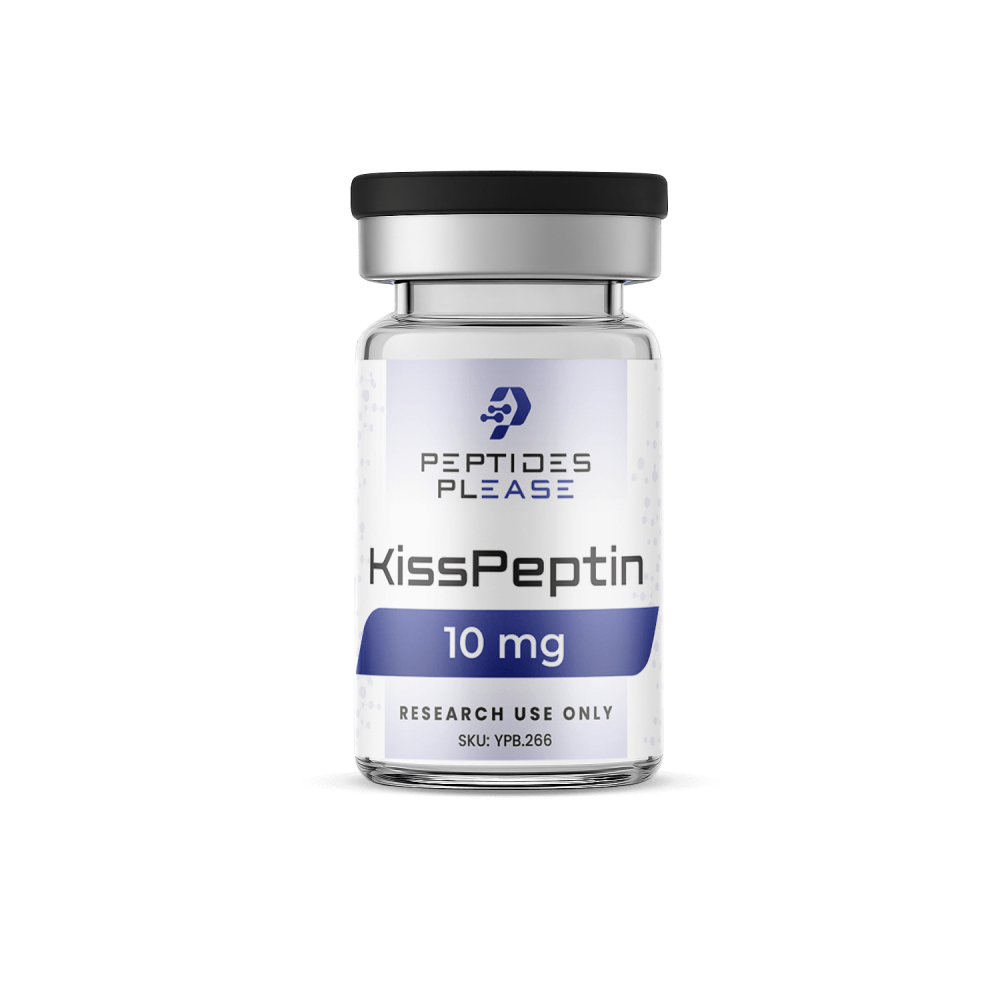 KisspeptinKissPeptin (10mg)
Peptides for testosterone are among the most-searched research compounds in endocrine science, because several short amino acid chains act as signaling molecules on the pathways that govern the body’s own testosterone production. Rather than introducing a hormone from outside, these peptides are studied for how they influence the hypothalamic-pituitary-gonadal (HPG) axis, prompting the release of gonadotropin-releasing hormone (GnRH), luteinizing hormone (LH), and follicle-stimulating hormone (FSH). All compounds discussed here are offered strictly for laboratory and in-vitro research.
The honest picture from the literature is that peptides fall into two groups: a small number that directly drive the LH/FSH cascade (such as kisspeptin-10), and a larger group of growth-hormone secretagogues that act only indirectly through improved body composition and growth-hormone signaling. This page separates the two so researchers can match a compound to the mechanism they are actually studying.
Key Takeaways
- Peptides do not replace testosterone; in research models they signal the HPG axis to influence the body’s own production of LH, FSH, and testosterone.
- Kisspeptin-10 is the most direct peptide signal studied, raising serum LH and transiently increasing testosterone within 24 hours of injection in human studies.
- Growth-hormone secretagogues such as CJC-1295, Ipamorelin, Tesamorelin, GHRP-6, and Hexarelin act indirectly, through growth hormone and IGF-1, not by directly raising testosterone.
- There is no FDA-approved peptide for raising testosterone; the evidence base is preclinical and early-stage.
- Peptides Please is a research chemical supplier, not a compounding pharmacy or a 503A/503B outsourcing facility, and ships research compounds to the USA and Canada.
How Peptides Influence Testosterone in Research Models
In research settings, peptides influence testosterone by acting on the HPG axis rather than by supplying the hormone directly. Signaling peptides prompt the hypothalamus and pituitary to release GnRH, which in turn triggers luteinizing hormone (LH) and FSH, the gonadotropins that signal the testes to synthesize testosterone endogenously. This upstream mechanism is why researchers distinguish peptides from exogenous hormone models: the goal in study design is to observe the body’s own production pathway, not to override it. Related compounds such as human chorionic gonadotropin (hCG) mimic LH to stimulate the testes and are frequently referenced in the literature, though hCG is not a peptide product offered here.
Peptides Studied for Low Testosterone
In low-testosterone research models, kisspeptin-10 and the broader class of GnRH-acting compounds are the most studied, because they stimulate GnRH, LH, and FSH to signal the body to produce more testosterone naturally. Newer orally studied compounds, including VDAC1-derived peptides, are an active research area but remain early-stage. Most of this work is preclinical or small-scale, so findings should be read as experimental rather than established.
Peptides Studied as an Alternative Signaling Model to TRT
A recurring theme in the literature is contrasting direct replacement models with peptide signaling models. Where testosterone replacement adds the hormone from outside, signaling peptides such as kisspeptin-10 are studied for how they prompt the body’s own GnRH/LH/FSH cascade, which in research models helps preserve fertility parameters and testicular volume. Long-term human data is limited, so these remain research questions rather than settled conclusions.
Peptides That Stimulate LH and FSH
The peptides most directly tied to testosterone in research are those that drive gonadotropin release. Kisspeptin acts upstream on GnRH neurons to produce pulsatile LH surges, and in human studies acute kisspeptin administration increased serum testosterone within 24 hours. Compounds that pulse GnRH directly prompt pituitary LH/FSH secretion, the essential step for testicular output. These are the mechanisms that distinguish the small group of peptides that genuinely move testosterone in experimental work.
Growth-Hormone Releasing Peptides and Testosterone
Growth-hormone secretagogues are frequently marketed around testosterone, but the evidence shows they act indirectly. CJC-1295 and Ipamorelin stimulate pituitary growth-hormone release and IGF-1 signaling rather than directly raising testosterone. In research models this improves body composition and metabolic markers, which can be associated with secondary hormonal changes, but the primary action is on the GH/IGF-1 pathway. The same applies to Tesamorelin, a GHRH analog studied for visceral fat reduction.
CJC-1295
CJC-1295 is a GHRH analog studied for sustained growth-hormone release. It is not a direct testosterone signal; its relevance to testosterone research is through downstream GH/IGF-1 effects on body composition.
Ipamorelin
Ipamorelin is a selective GH secretagogue often paired with CJC-1295 in study designs. Its action is on growth-hormone release, with any testosterone relevance being indirect.
GHRP-6 and Hexarelin
GHRP-6 and Hexarelin are ghrelin-receptor agonists studied for growth-hormone release. Like the other secretagogues, they are investigated for GH pathways rather than direct testosterone synthesis.
Peptides Studied for Testicular Function and Hormone Balance
Within reproductive research, GnRH-acting peptides are of interest because they engage the testes through the natural LH/FSH signal rather than suppressing the axis the way exogenous hormone models can. This is the basis for studies examining preservation of testicular function and overall endocrine balance. The emphasis in the literature is on signaling the gland, not replacing its output.
Peptides Studied for Indirect Testosterone Support
Several peptides are grouped under “indirect support” because their primary action lies elsewhere but may intersect with hormonal research. BPC-157 is studied for tissue repair and inflammation rather than testosterone directly, while copper peptide GHK-Cu is investigated in skin and regenerative contexts. Neither is a gonadotropin signal, and both should be understood as adjacent research tools rather than testosterone peptides.
Sleep, Metabolism, and Testosterone Research
Because endogenous testosterone production in research models is sensitive to metabolic and circadian factors, some peptide studies examine growth-hormone and sleep-related pathways as indirect variables. Improved metabolic markers and reduced visceral fat in secretagogue studies are the mechanisms most often cited for any secondary hormonal effect, reinforcing that these peptides are indirect rather than direct testosterone drivers.
Which Peptides Do Not Raise Testosterone
An honest reading of the evidence is important for study design. Several widely marketed peptides do not directly raise testosterone: the growth-hormone secretagogues act on GH/IGF-1, and PT-141 acts on melanocortin receptors tied to arousal rather than on the testosterone pathway at all. Matching the compound to the mechanism avoids attributing a direct testosterone effect to a peptide that works another way.
Handling and Research-Use Framing
Every compound referenced here is supplied for laboratory and in-vitro research only and is not for human or animal consumption. Research-grade material should be evaluated by its certificate of analysis, purity, and stability data before use in any protocol. Nothing on this page is a dosing guide or a human-use protocol; it summarizes published mechanisms so researchers can select the right compound for the pathway under investigation.
Frequently Asked Questions
What peptides increase testosterone?
In research models, the peptides most directly tied to testosterone are GnRH-acting signals such as kisspeptin-10, which raise LH and FSH and can transiently increase serum testosterone. Growth-hormone secretagogues like CJC-1295 and Ipamorelin act only indirectly.
Does CJC-1295 increase testosterone?
Not directly. CJC-1295 is a GHRH analog studied for growth-hormone release and IGF-1 signaling. Any testosterone relevance in research is secondary to its effect on body composition, not a direct action on the testes.
Do peptides affect male hormones?
In research models, GnRH-acting peptides engage the HPG axis that governs LH, FSH, and testosterone, so they are studied for their influence on male reproductive hormones. The effect depends on the specific peptide and its mechanism.
Which peptides trigger downstream endogenous testosterone production?
Peptides that stimulate GnRH or mimic its action on the pituitary — kisspeptin being the most studied — are the ones that trigger the downstream LH/FSH cascade leading to endogenous testosterone synthesis in experimental work.
Is there an FDA-approved peptide for testosterone?
No. There is currently no FDA-approved peptide for raising testosterone. The available evidence is preclinical or early-stage, which is why these compounds are offered strictly for research.
Shop Research Peptides at Peptides Please
Researchers studying the testosterone pathway can source high-purity compounds across the relevant mechanisms. For the direct gonadotropin signal, Shop Kisspeptin. For growth-hormone secretagogue research, Shop CJC-1295 and Shop Ipamorelin. Every order ships to the USA and Canada with research-use-only framing. Order Tesamorelin for GHRH-pathway studies.