BPC-157
Showing the single result
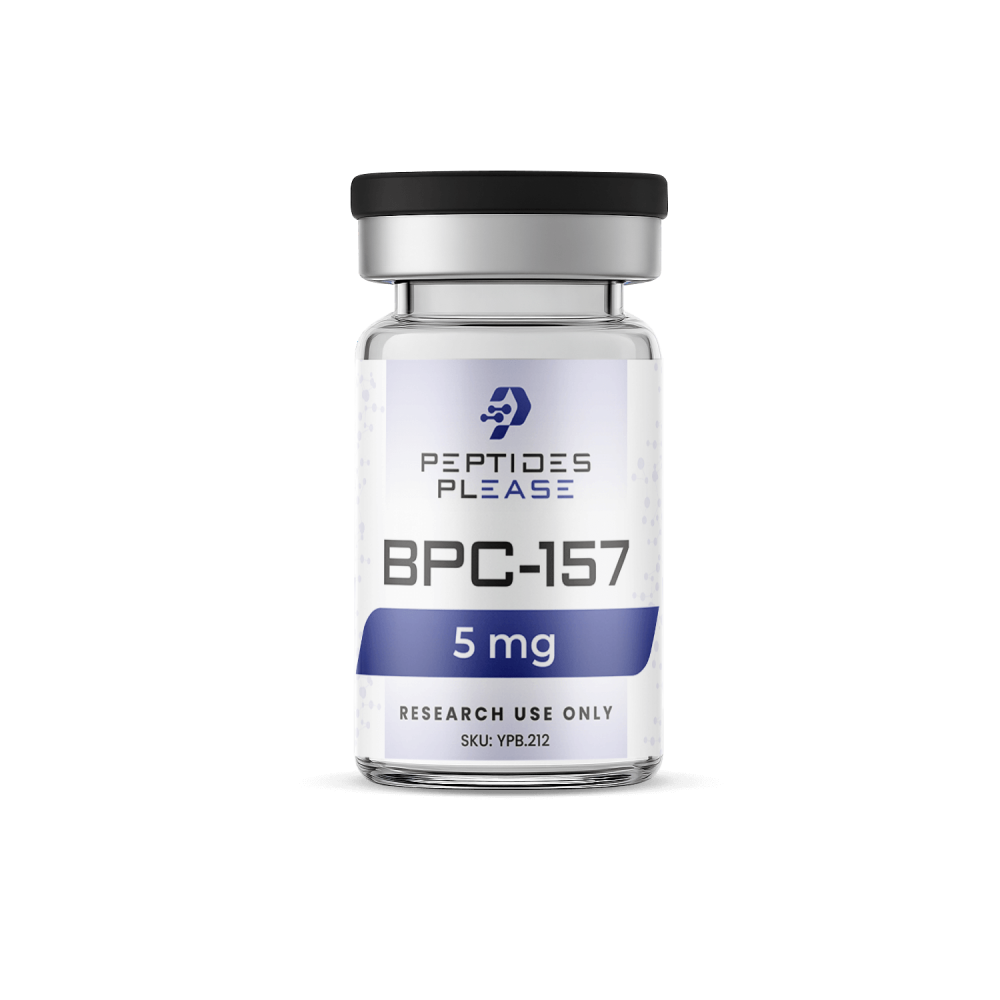
BPC-157, or Body Protection Compound-157, is a synthetic pentadecapeptide: a chain of 15 amino acids modeled on a protective sequence found in human gastric juice. It is studied for its role in tissue repair, angiogenesis, and gastrointestinal protection in preclinical models. Every vial sold here is supplied strictly for laboratory research and is not for human or animal consumption. This page covers what BPC-157 is, how it behaves in research settings, how it is reconstituted and stored, where its legal status stands in 2026, and how to buy it.
Key Takeaways
- BPC-157 is a stable 15-amino-acid peptide (Gly-Glu-Pro-Pro-Pro-Gly-Lys-Pro-Ala-Asp-Asp-Ala-Gly-Leu-Val) derived from a protein in gastric juice.
- In preclinical studies it is linked to angiogenesis through the VEGFR2 and Akt-eNOS pathways, plus effects on fibroblast activity and inflammation signaling.
- Supplied as a lyophilized powder, it is reconstituted with bacteriostatic water, swirled rather than shaken, and refrigerated once mixed.
- Unmixed powder is stable for roughly 12 to 24 months when kept cool, dark, and dry. Reconstituted solution should be refrigerated at 2 to 8 degrees Celsius and is typically used within about 30 days.
- Regulatory status changed in 2026: the FDA removed BPC-157 from its Category 2 compounding list in April 2026, but it remains unapproved for human use and is sold for research use only.
- Peptides Please supplies BPC-157 at 99%+ purity, verified by independent third-party testing.
What Is BPC-157?
BPC-157 is a synthetic peptide built from a specific, non-redundant sequence of 15 amino acids joined by peptide bonds. It is produced in the laboratory by solid-phase peptide synthesis, and the finished material is a white, lyophilized (freeze-dried) powder that dissolves readily in water or saline.
Its defining trait is stability. Unlike many fragile peptides, BPC-157 resists breakdown in the presence of stomach acid, a property inherited from its origin in human gastric juice. Its sequence also lacks common cleavage sites for digestive enzymes, which makes it more durable than standard peptides against enzymatic breakdown. Research-grade BPC-157 is the active peptide plus, depending on the formulation, stabilizing salts such as acetate, a solvent such as bacteriostatic water for reconstitution, and bulking agents used during freeze-drying. There are no active secondary ingredients: the peptide itself is the compound under study.
How BPC-157 Works in Research Models
Most of what is known about BPC-157 comes from animal and in-vitro studies, where it appears to act on several repair pathways at once rather than a single target.
- Angiogenesis. It upregulates vascular endothelial growth factor receptor 2 (VEGFR2) and activates the Akt-eNOS pathway, supporting the formation of new blood vessels at injury sites, which is often a rate-limiting step in tissue healing.
- Nitric oxide signaling. It interacts with the nitric oxide system, which regulates vascular tone and blood flow.
- Growth factor and fibroblast activity. In one widely cited study, growth hormone receptor was among the most strongly upregulated genes in tendon fibroblasts exposed to BPC-157, alongside increased fibroblast proliferation and collagen signaling.
- Inflammation and cytoprotection. Research describes reduced pro-inflammatory cytokine activity and protective effects on gastric and intestinal tissue in injury models.
What BPC-157 Is Studied For
In the research literature, BPC-157 is examined across four broad areas: musculoskeletal repair (tendons, ligaments, muscle, and bone), gastrointestinal protection (gastric mucosa integrity and models of inflammatory bowel conditions), vascular and angiogenic activity, and neuroprotective signaling. More than 100 preclinical studies have reported protective or reparative effects across these tissue types. Human clinical data remains preliminary, which is why the compound is restricted to research contexts.
BPC-157 and Blood Pressure in Research
Because BPC-157 interacts with nitric oxide signaling and vascular endothelial growth factor activity, researchers studying circulation have looked at its relationship to vascular tone. Nitric oxide helps blood vessels relax and widen, so compounds that influence that pathway can in turn influence vascular behavior in a model. Published findings on blood pressure are not conclusive, and this remains an area of preclinical investigation rather than an established effect. This is one more reason purity matters: reliable observations about vascular activity depend on a compound that behaves exactly as expected, free of contaminants.
How to Reconstitute BPC-157 for Research
BPC-157 ships as a lyophilized powder because the dry state keeps the 15-amino-acid chain stable through shipping and storage, prevents hydrolysis, and resists microbial growth. Reconstitution turns it back into a solution for laboratory work. The standard technique:
- Work in a clean, sanitized space and wipe the rubber stoppers of both the peptide vial and the water vial with a 70% isopropyl alcohol swab.
- Use bacteriostatic water as the diluent. Draw it with a sterile syringe.
- Inject the water slowly down the inside wall of the vial so the stream does not hit the powder directly.
- Swirl gently until the powder fully dissolves. Never shake, as agitation can damage the peptide bonds and cause foaming.
- Confirm the solution is clear with no clumping before use.
The volume of water determines the concentration of the final solution, which researchers calculate to suit their protocol.
Storing BPC-157 in the Lab
Storage drives shelf life, and small lapses degrade a peptide before it ever reaches analysis.
- Unmixed powder. The lyophilized form is the most stable state. Kept sealed, cool, dark, and dry, it holds for roughly 12 to 24 months. For storage beyond a few months, refrigeration is standard; for a year or more, a freezer at around -20 degrees Celsius is preferred.
- Reconstituted solution. Once mixed, refrigerate at 2 to 8 degrees Celsius and protect from light. Reconstituted BPC-157 is typically used within about 30 days. Avoid repeated freeze-thaw cycles, which cause condensation and structural stress, and do not freeze the reconstituted solution, since ice crystals degrade the peptide’s shelf life.
The simplest rule researchers follow: keep it cold, keep it dry, and limit time at room temperature.
Handling and Administration Routes in Research Models
In laboratory studies, the route used depends on what is being investigated. Research on localized musculoskeletal repair often uses targeted subcutaneous delivery near the site of interest, while gastrointestinal research models sometimes use oral routes to study direct contact with the gastric lining. BPC-157’s unusual gastric stability is part of why oral routes appear in the literature at all, since most peptides break down in stomach acid. These are experimental design choices in animal and in-vitro work. BPC-157 is not approved for human use, and nothing here is a human protocol.
Is BPC-157 Legal in 2026?
BPC-157 is not an FDA-approved drug, and it has not completed the clinical trial process required for approval. Its regulatory status did shift in 2026, and the detail matters.
In April 2026, the FDA removed BPC-157 from its Category 2 list, the designation that had effectively barred compounding pharmacies from preparing it. Removal lifts that specific barrier, but it is not the same as approval: it does not place BPC-157 on the Category 1 list that would authorize compounding under section 503A. At its July 23-24, 2026 meeting, the FDA’s Pharmacy Compounding Advisory Committee voted 8 to 6 to recommend adding BPC-157 to the 503A bulk drug substances list, but final rulemaking is still pending and typically takes 8 to 12 months.
Separately, BPC-157 is prohibited in sport by WADA. It is also not a legal dietary supplement, since it meets neither the pre-1994 marketing test nor a New Dietary Ingredient notification. The clear, stable pathway is research use: BPC-157 sold and labeled strictly for in-vitro and laboratory study, not for human consumption. Peptides Please is a research chemical supplier, not a compounding pharmacy or a 503A/503B outsourcing facility, and every vial ships on that research-use-only basis.
Buy BPC-157 at Peptides Please
Peptides Please supplies BPC-157 at 99%+ purity, manufactured in certified facilities and verified by independent third-party laboratory testing, so your data reflects the peptide and not contaminants or degradation.
Buy BPC-157 in single vials, or explore the research blends that pair it with related repair peptides: the GLOW, Wolverine, and KLOW formulas in our peptide blends range combine BPC-157 with TB500 and GHK-Cu. Researchers studying copper-peptide repair alongside BPC-157 can also shop GHK-Cu.
Frequently Asked Questions
Does BPC-157 need to be refrigerated?
Unmixed powder can sit in a cool, dark, dry place for short periods, but refrigeration is standard beyond a few months. Once reconstituted, refrigeration at 2 to 8 degrees Celsius is required.
How do you reconstitute BPC-157?
Add bacteriostatic water slowly down the side of the vial using a sterile syringe, then swirl gently until clear. Do not shake, and do not spray the water directly onto the powder.
How long does reconstituted BPC-157 last?
Refrigerated at 2 to 8 degrees Celsius and protected from light, reconstituted BPC-157 is typically used within about 30 days. Do not freeze the solution.
What is in BPC-157?
The active compound is a 15-amino-acid pentadecapeptide. Research-grade formulations may also contain stabilizing salts and a diluent such as bacteriostatic water, with no active secondary ingredients.
Is BPC-157 legal in 2026?
It was removed from the FDA Category 2 list in April 2026 and recommended for 503A listing by advisory vote in July 2026, but final rulemaking is pending and it remains unapproved for human use. It is sold for research use only.
Does BPC-157 affect blood pressure?
In preclinical models BPC-157 interacts with nitric oxide and vascular signaling pathways that regulate vascular tone, but published findings on blood pressure are not conclusive and remain under research.