NAD+
Showing the single result
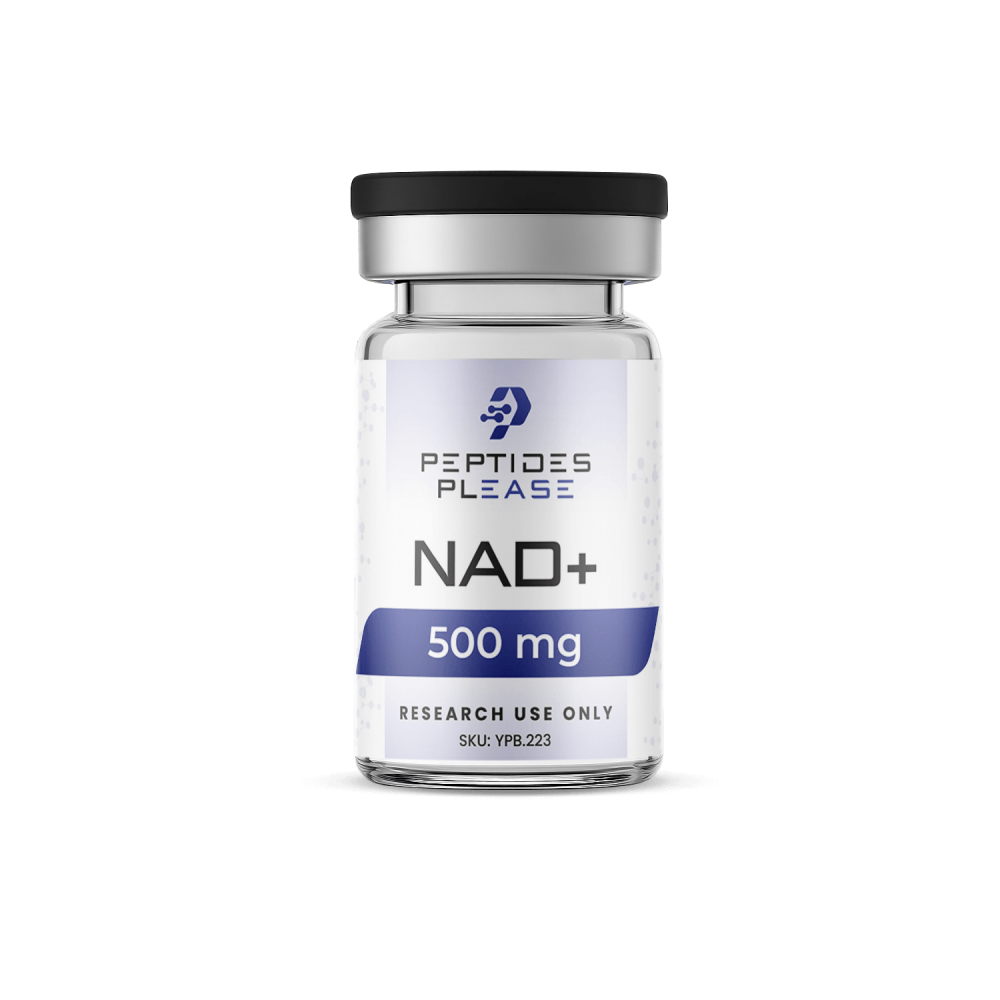
NAD+ (nicotinamide adenine dinucleotide) is a vital coenzyme central to cellular energy production and metabolic research. In every living cell it shuttles electrons through redox reactions and acts as a required substrate for enzymes that govern DNA repair, gene regulation and cellular stress responses. For laboratories studying metabolism, mitochondrial function and aging pathways, the integrity of this molecule is the single most important variable, which makes correct reconstitution, storage and handling essential.
This page brings together everything a research buyer needs in one place: what NAD+ is and how it works, how to reconstitute it, what water to use, the volumes for common vial sizes, what a correctly restored solution should look like, and the storage and handling that preserve its activity. All products are sold strictly for Research Use Only and are not for human or animal use.
Buy NAD+ for Research at Peptides Please
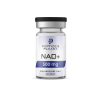
Elevate your studies on cellular energy, DNA repair and metabolic pathways with high-purity NAD+ from Peptides Please, a trusted source for research-grade peptides. Every vial is manufactured in certified facilities, verified by independent third-party laboratory testing at ≥99% purity, and ships with a certificate of analysis. Order NAD+ 500mg for your next study.
What Is NAD+?
NAD+ (nicotinamide adenine dinucleotide) is an essential coenzyme found in all living cells that helps convert nutrients into usable energy and supports critical processes such as DNA repair, cell survival and stress response. In its oxidized form (NAD+) it accepts electrons during metabolic reactions and is converted to NADH, which then donates those electrons to the mitochondrial electron transport chain to generate ATP, the main energy currency of the cell. Beyond energy metabolism, NAD+ is a required substrate for enzymes such as sirtuins and PARPs that regulate gene expression, aging pathways and cellular resilience.
Liposomal NAD+
Liposomal NAD+ is a formulation in which NAD+ or its precursors are encapsulated within microscopic lipid bubbles called liposomes. These liposomes are built from phospholipid bilayers that mimic natural cell membranes, which protects the payload from degradation and, in research models, can increase delivery into tissues compared with standard preparations. It is studied as one approach to raising cellular NAD+ availability in experimental settings.
NAD+ Mechanism of Action
NAD+ acts primarily as a coenzyme in cellular metabolism and signaling, functioning in redox reactions and as a substrate for enzymes that regulate aging, DNA repair and energy production.
- Redox reactions: NAD+ serves as an electron acceptor in catabolic pathways such as glycolysis and the TCA cycle, converting to NADH to transfer electrons for ATP generation via oxidative phosphorylation.
- Enzyme substrate roles: NAD+ is consumed by sirtuins during protein deacetylation and by PARPs during DNA repair, and is processed by CD38 and CD157 to produce signaling molecules.
- Metabolic pathways: NAD+ is sustained through de novo synthesis from tryptophan and through salvage pathways that recycle nicotinamide, NR and NMN via enzymes such as NAMPT.
NAD+ in Research
Because cellular NAD+ declines with age in many models, it is a frequent focus of research into energy metabolism, mitochondrial function, DNA repair and senescence. Investigators use high-purity NAD+ to probe sirtuin activity, metabolic flux and cellular stress resistance in controlled, in-vitro and model systems. None of these applications involve human or animal use.
How to Reconstitute NAD+
NAD+ ships as a lyophilized (freeze-dried) powder because the molecule is chemically unstable in liquid over time. Lyophilization removes water under vacuum while the compound is frozen, which prevents hydrolysis and oxidation, improves thermal stability and extends shelf life. Reconstitution returns the powder to a measured liquid for laboratory work and must be done under sterile conditions.
The core method: wipe the septum of both the NAD+ vial and the diluent vial with separate alcohol swabs and let them air-dry. Draw your calculated volume of diluent, insert the needle at a slight angle and direct the stream slowly down the inner glass wall rather than straight onto the powder. Remove the needle and gently swirl or roll the vial between your hands. Do not shake it.
What Type of Water to Use for NAD+
Bacteriostatic water (sterile water containing 0.9% benzyl alcohol as a preservative) is the standard diluent for multi-draw research vials because the preservative resists microbial growth across repeated access. Sterile or distilled water can be used for single-session work but offers no antimicrobial protection. Match the diluent to your protocol and keep everything sterile.
How Much Bacteriostatic Water to Reconstitute NAD+ 500mg
Adding 5 mL of bacteriostatic water to a 500mg vial yields a concentration of 100 mg/mL, a common working strength that keeps the arithmetic simple for measured draws. Using a smaller volume produces a more concentrated solution; using more dilutes it. Choose the volume that fits your required concentration per draw.
How Much Bacteriostatic Water to Reconstitute NAD+ 1000mg
For a 1000mg vial, 10 mL of bacteriostatic water again yields 100 mg/mL. If you prefer a lower total volume, 5 mL produces 200 mg/mL. Always calculate concentration as total milligrams divided by total millilitres of diluent before you begin.
What Reconstituted NAD+ Should Look Like
A correctly reconstituted NAD+ solution is clear and free of particles once the powder has fully dissolved. A faint tint can be normal, but visible cloudiness, floating particulate or a residue that will not dissolve indicates a problem with the vial, the diluent or the technique.
When Not to Use Reconstituted NAD+
Do not use a solution that is cloudy, discolored or contains particulate after gentle swirling, one that has passed its storage window, or one where sterility may have been compromised. Discard any vial whose integrity is in doubt rather than risk invalid data.
Storage and Handling of Reconstituted NAD+
Store the unopened lyophilized vial as supplied, protected from light and heat. After reconstitution, refrigerate the solution immediately and keep it cold between uses; most research handling guidance treats roughly 30 days under refrigeration as a practical working window, with longer-term storage calling for freezing. Minimise freeze-thaw cycles, keep the vial out of direct light, and wipe the septum before every draw to preserve the integrity of the compound and the reproducibility of your results.
Timing Considerations in NAD+ Research
Because cellular NAD+ levels follow circadian patterns and shift with metabolic demand, the timing of sampling and intervention is a real variable in study design rather than a convenience. Investigators studying energy metabolism often align their protocol with the active phase of the model organism so the coenzyme is measured when demand is naturally higher. Documenting the time point, the concentration and the handling conditions for every run is what keeps data comparable across a series of experiments.
Routes Studied in NAD+ Research
The research literature examines NAD+ and its precursors across several delivery formats, including reconstituted solutions, encapsulated liposomal preparations, and precursor compounds such as NR and NMN that cells convert through salvage pathways. Each format differs in stability and in how it is handled at the bench. These distinctions matter for experimental design and are the reason purity and correct reconstitution are emphasised throughout this page. This information is provided for laboratory research context only.
NAD+ Price
Research-grade NAD+ is priced by vial size and purity. Peptides Please lists NAD+ at a transparent per-vial price with a certificate of analysis included, so you can match concentration and budget to your protocol. See current NAD+ pricing.
Research NAD+ for Sale at Peptides Please
Peptides Please supplies NAD+ and related research compounds at ≥99% purity, third-party tested, with reliable shipping across the USA and Canada. Explore adjacent longevity and metabolic research compounds in our bioregulators range and our glutathione line, or add NAD+ to your next order below.
Frequently Asked Questions
How do you reconstitute NAD+ powder?
Wipe both vials with alcohol swabs, draw your calculated volume of bacteriostatic water, run it slowly down the inner wall of the NAD+ vial, then gently swirl until the solution is clear. Do not shake. Refrigerate immediately after reconstitution.
How much bacteriostatic water do I add to a 500mg NAD+ vial?
Adding 5 mL of bacteriostatic water to a 500mg vial yields 100 mg/mL. Adjust the volume up or down to reach the concentration your protocol requires.
Can NAD+ be reconstituted with saline?
Bacteriostatic water is the standard diluent for multi-draw research vials because its preservative resists microbial growth. Sterile saline may be used for single-session work but offers no antimicrobial protection, so match the diluent to your protocol.
Should NAD+ be refrigerated after reconstituting?
Yes. Refrigerate reconstituted NAD+ immediately and keep it cold between uses, with a practical working window of around 30 days. Freeze for longer-term storage and avoid repeated freeze-thaw cycles.
What does NAD+ do in the cell?
NAD+ carries electrons in redox reactions to drive ATP production and serves as a substrate for sirtuins and PARPs involved in DNA repair and gene regulation, which is why it is central to metabolic and aging research.
Is NAD+ just vitamin B3?
No. Vitamin B3 (niacin and related forms) is a precursor the body converts into NAD+ through salvage pathways. NAD+ itself is the active coenzyme that participates directly in cellular energy and signaling reactions.
Ready to order? Buy research-grade NAD+ now, COA included, shipping to the USA and Canada.