CJC-1295
Showing all 2 results
-
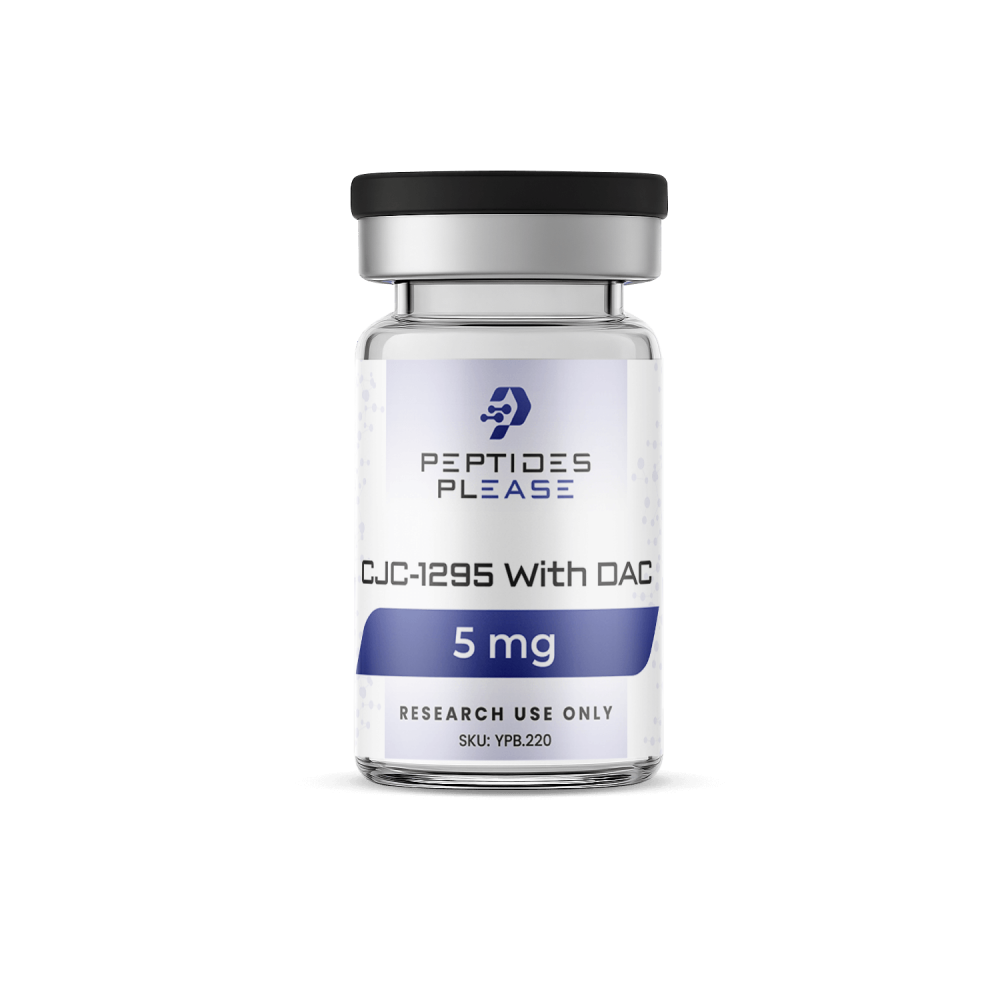 CJC-1295CJC-1295 - With DAC (5mg)
 -
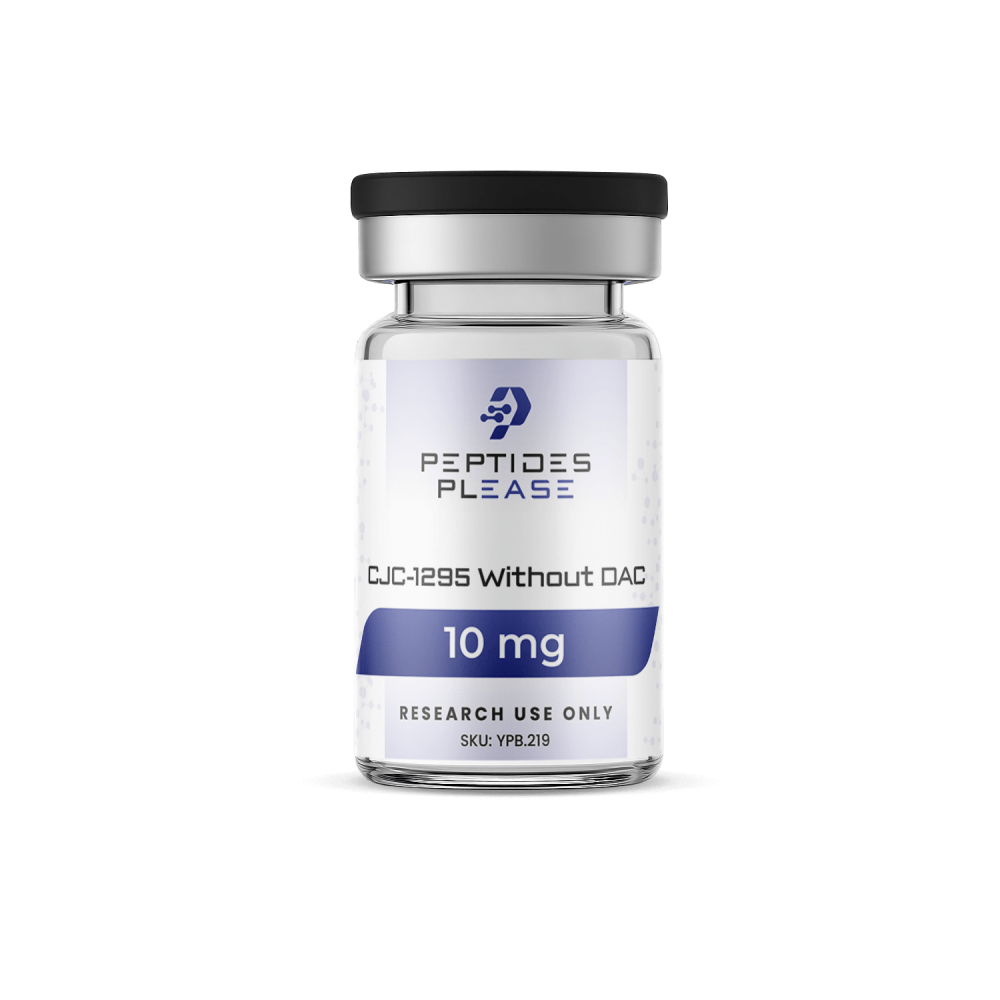 CJC-1295CJC-1295 Without DAC (10mg)
CJC-1295 is a synthetic growth hormone-releasing hormone (GHRH) analog studied as a long-acting growth hormone secretagogue. Peptides Please supplies research-grade CJC-1295, including the with-DAC form, the no-DAC form, and a CJC-1295 with ipamorelin blend, for laboratory and in-vitro study only. Every product below is sold strictly for research use and is not for human or animal consumption. Browse the CJC-1295 peptides in stock, then read the research summary underneath.
What Is CJC-1295?
CJC-1295 is a synthetic analog of growth hormone-releasing hormone (GHRH). In research models it binds GHRH receptors on the pituitary gland and prompts the pulsatile release of the body’s own growth hormone (GH), rather than introducing GH directly. The with-DAC version adds a drug affinity complex that binds to serum albumin, which extends its measurable half-life to several days. Downstream, that GH signal raises insulin-like growth factor-1 (IGF-1), the marker most studies track when measuring CJC-1295 activity.
What Does CJC-1295 Do?
In laboratory research, CJC-1295 is used to study the GH and IGF-1 axis, body-composition signaling, protein synthesis, and lipolysis (fat metabolism). The original human pharmacology study by Teichman and colleagues (2006) reported that a single dose of CJC-1295 with DAC raised mean GH concentrations roughly 2 to 10 fold and IGF-1 roughly 1.5 to 3 fold, with the elevation sustained for up to about six days. That prolonged, single-dose effect is what separates CJC-1295 from short-acting GHRH peptides in the research literature.
CJC-1295 With DAC vs CJC-1295 No DAC
The two forms share the same GHRH core but behave very differently because of the DAC modification. This is the distinction researchers most often compare.
| Property | CJC-1295 With DAC | CJC-1295 No DAC (Mod GRF 1-29) |
|---|---|---|
| Half-life (reported) | About 5 to 8 days | About 30 minutes |
| GH release pattern | Sustained elevation over days | Sharp, short GH pulse |
| Reported research frequency | Once or twice weekly | Frequent, one to several times daily |
| Studied with ipamorelin | Yes | Yes (common blend pairing) |
Our CJC-1295 with DAC (5mg) is the long-acting form, and our CJC-1295 without DAC (10mg) is the short-acting Mod GRF 1-29 form. Both are research-use-only compounds.
CJC-1295 and Ipamorelin
CJC-1295 and ipamorelin are frequently studied together because they act on two different receptors at once. CJC-1295 signals through the GHRH receptor, while ipamorelin is a selective ghrelin-receptor (GHSR-1a) agonist. In combination research the two produce a larger, cleaner GH pulse than either peptide alone, which is why the pairing appears so often in growth-hormone-axis studies. You can research the pre-combined CJC-1295 and ipamorelin 2X blend, or pair CJC-1295 with ipamorelin on its own.
CJC-1295 Ipamorelin Dosage in the Research Literature
Because there is no FDA-approved CJC-1295 product, there is no official human dose and no validated dosage calculator. The figures below describe protocols reported in published research and laboratory settings only, and are documented here for research context, not as instructions for use.
- CJC-1295 with DAC: reported research protocols describe roughly 1 to 2 mg per administration, once or twice weekly, reflecting its multi-day half-life.
- CJC-1295 no DAC (Mod GRF 1-29): reported protocols describe roughly 100 to 300 mcg per administration, one to a few times per day, reflecting its short half-life.
- CJC-1295 with ipamorelin: combination studies commonly pair the peptides at similar microgram amounts, for example about 100 to 200 mcg of each in the no-DAC blend.
All Peptides Please products are supplied for research use only and are not for human or animal consumption.
CJC-1295 Side Effects Reported in Research
Side effects documented in the literature and reported by researchers include flushing or flu-like sensations shortly after administration, headache, injection-site reactions, water retention, tingling or numbness in the extremities, and transient changes in insulin sensitivity at higher exposures. The with-DAC form is more associated with water retention and tingling because it stays active for days, while the no-DAC form is generally described as milder and easier to titrate, with most reported effects fading within 30 to 60 minutes as the compound clears. The Teichman study noted a favorable overall safety profile with no evidence of immunogenicity.
CJC-1295 and Ipamorelin Before and After: What Studies Observe
When researchers ask how long CJC-1295 and ipamorelin take to show results, the honest answer depends on what is being measured. Biochemical markers move first: GH and IGF-1 changes are measurable within hours of a dose, and IGF-1 stays elevated for days with the DAC form. Body-composition and recovery signals studied in longer research protocols are typically assessed over several weeks to a few months, not days. Any before-and-after comparison in a research setting is tracked through bloodwork and controlled measurement, not anecdote.
Buy CJC-1295 Peptide for Research at Peptides Please
Peptides Please supplies research-grade CJC-1295 peptides and ships to research customers across the USA and Canada. Choose the long-acting CJC-1295 with DAC, the short-acting CJC-1295 no DAC, or the ready-made CJC-1295 and ipamorelin blend above. Researchers studying the wider growth-hormone axis also stock tesamorelin. All products are for research use only.
Frequently Asked Questions
What is CJC-1295?
CJC-1295 is a synthetic GHRH analog studied as a growth hormone secretagogue. It prompts the pituitary to release the body’s own growth hormone and, downstream, raises IGF-1. It is supplied for research use only.
What does CJC-1295 do?
In research models it stimulates pulsatile GH release and elevated IGF-1. The original human study reported GH rising 2 to 10 fold and IGF-1 1.5 to 3 fold after a single with-DAC dose, sustained for up to about six days.
What is the difference between CJC-1295 with DAC and no DAC?
The DAC form binds albumin and stays active for about 5 to 8 days, suiting weekly research protocols. The no-DAC form (Mod GRF 1-29) clears in about 30 minutes and produces a short, sharp GH pulse.
How long does it take to see results with CJC-1295 and ipamorelin?
Biochemical markers such as GH and IGF-1 shift within hours of a dose. Body-composition and recovery measures studied in research are usually assessed over several weeks to a few months.
Is there a CJC-1295 ipamorelin dosage calculator?
No validated human dosage calculator exists because there is no FDA-approved product. Published research protocols describe the microgram and milligram ranges noted above, recorded for research context only.
What are the side effects of CJC-1295?
Reported effects include flushing, headache, water retention, tingling in the extremities, injection-site reactions, and transient insulin-sensitivity changes at higher exposures. The no-DAC form is generally described as milder.