GHRP-6 Acetate
Showing the single result
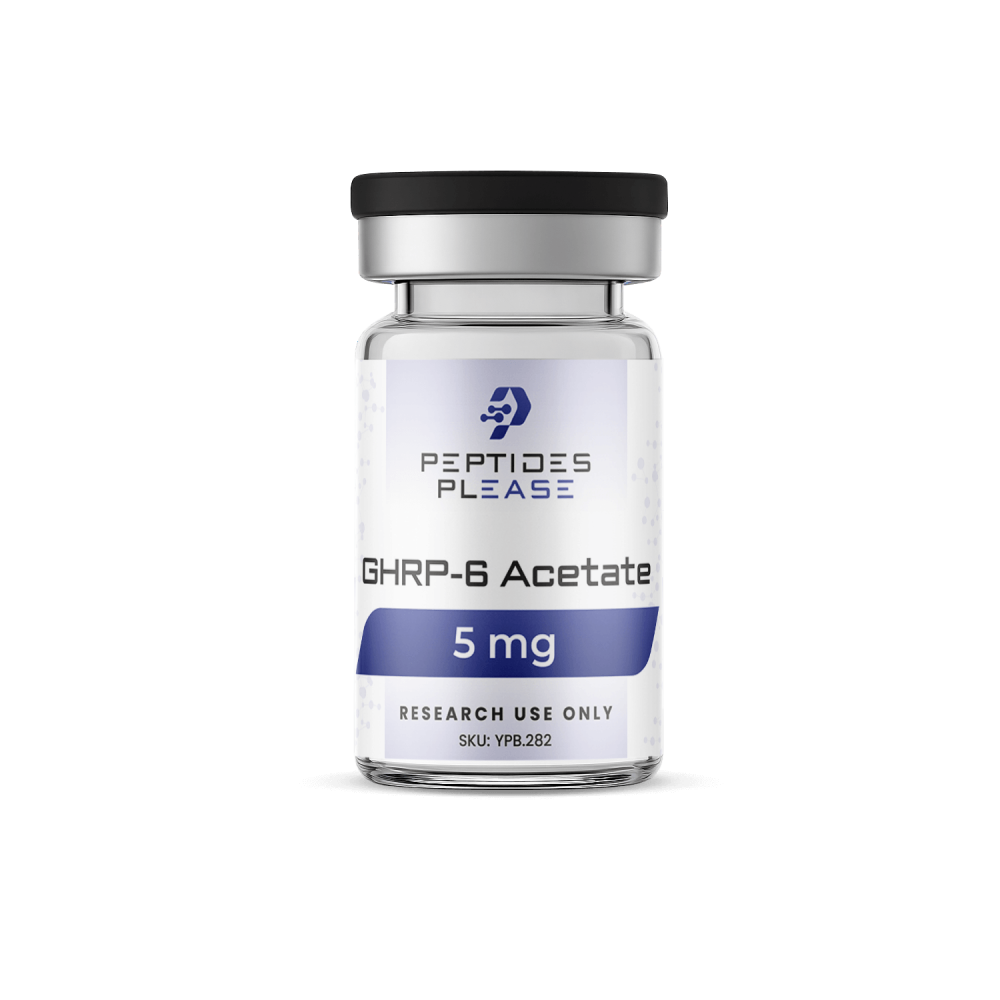
GHRP-6 acetate, a potent ghrp 6 acetate compound, functions as a growth hormone-releasing peptide that selectively stimulates the ghrelin receptor in the anterior pituitary gland. Studies using the isolated rat pituitary gland have demonstrated its ability to trigger robust intracellular calcium mobilization and inositol phosphate production, leading to a dose-dependent release of growth hormone without significantly affecting thyroid-stimulating hormone levels. Unlike synthetic growth hormone, which directly supplements GH, GHRP-6 acetate acts upstream by mimicking ghrelin’s effects to amplify endogenous secretion. It also modestly influences follicle-stimulating hormone but notably spares thyroid-stimulating hormone secretion, highlighting its targeted pituitary action.
This mechanism positions GHRP-6 acetate as a valuable tool in research exploring growth hormone pathways, particularly for applications in metabolism, muscle growth, and recovery. By binding to the ghrelin receptor, it promotes pulsatile GH release akin to natural physiology, avoiding the supraphysiological spikes associated with synthetic growth hormone administration. Experiments with isolated rat pituitary gland models confirm its specificity, as it elevates intracellular calcium mobilization and inositol phosphate production while maintaining neutrality on thyroid-stimulating hormone and minimal impact on follicle-stimulating hormone, underscoring its potential in peptide-based therapies.
Buy GHRP-6 Acetate For Research at Peptides Please
Buy GHRP-6 Acetate for research at Peptides Please, a potent peptide ideal for studying interactions with the human receptor for luteinizing hormone, where it functions as a negative allosteric modulator that inhibits binding in BHK cells expressing the receptor on cell membranes. This compound enables precise investigations into receptor modulation and signaling pathways, supporting advanced peptide research without intended human consumption.
What Is GHRP 6 Acetate?
GHRP-6 Acetate is a synthetic hexapeptide that functions as a growth hormone secretagogue by binding to the gh secretagogue receptor (GHS-R), a G protein-coupled receptor also known as a protein-coupled receptor involved in ghrelin signaling. This interaction mimics ghrelin, the natural “hunger hormone,” stimulating growth hormone (GH) release from the pituitary gland while significantly increasing food intake, often within 20-30 minutes of administration. Administered subcutaneously at doses like 50 μg in research settings, it elevates GH levels without substantially affecting other hormones such as TSH, LH, FSH, or prolactin, making it a key tool for studying endocrine regulation, metabolism, and appetite control.
GHRP-6 Acetate Mechanism of Action
GHRP-6 Acetate is a synthetic, non-opioid peptide that potently stimulates growth hormone (GH) release. It acts as an agonist of the ghrelin receptor (GHS-R1a) in the pituitary and hypothalamus through a calcium-dependent mechanism: it inhibits potassium channels, boosts intracellular calcium levels, and activates protein kinase C.
- Receptor Activation: Binds specifically to the growth hormone secretagogue receptor (GHS-R1a), the same target as the hunger hormone ghrelin.
- Dual-Site Stimulation: Triggers GH release directly at the anterior pituitary and indirectly via the hypothalamus, likely by promoting a specific GH-releasing factor.
- Intracellular Signaling: Unlike GHRH (which uses the cAMP pathway), GHRP-6 primarily signals through elevated cytosolic calcium and the phospholipase C/protein kinase C pathway.
- Somatostatin Inhibition: Functions as a functional antagonist to somatostatin, countering its GH-suppressive effects.
- Synergy with GHRH: Amplifies GH release when combined with GHRH due to their distinct receptors and pathways.
GHRP-6 Acetate Benefits
GHRP-6 Acetate (Growth Hormone Releasing Peptide-6) is a synthetic hexapeptide designed to mimic ghrelin, a natural hunger hormone. It binds to specific receptors in the pituitary gland and hypothalamus, triggering a rapid pulse of endogenous growth hormone (GH) release—often 5-10 times higher than baseline levels. Unlike direct GH injections, it promotes the body’s own production, reducing risks like desensitization. Developed in the 1980s, it’s studied for therapeutic uses in growth deficiencies, muscle wasting, and recovery (supported by NIH research on ghrelin mimetics). GHRP-6 offers multifaceted effects, primarily through GH elevation, IGF-1 upregulation, and anti-inflammatory pathways. Here’s an elaborated breakdown:
- Muscle Growth & Strength: Stimulates protein synthesis and nitrogen retention, leading to lean muscle hypertrophy. Users often report 5-15% strength gains in weeks, ideal for athletes or those combating sarcopenia (age-related muscle loss).
- Fat Loss: Boosts lipolysis (fat breakdown) by increasing metabolism and GH-mediated fat mobilization from adipose tissue. It targets stubborn areas like the abdomen, with studies showing enhanced fatty acid oxidation.
- Healing & Tissue Repair: Accelerates collagen deposition and cell proliferation, speeding wound closure by up to 50% in animal models. Supports tendon, ligament, and joint repair, beneficial for injury recovery or post-surgery.
- Cardioprotection: Reduces myocardial inflammation and oxidative stress via GH-independent pathways. Research indicates it protects against ischemia-reperfusion injury, potentially lowering risks in heart disease.
- Anti-Aging Effects: Improves skin turgor through better collagen production and enhances deep sleep stages (REM and slow-wave), aiding hormonal restoration and cognitive function.
- Appetite Stimulation: Acts as a potent orexigen (appetite booster) by crossing the blood-brain barrier, increasing hunger within 30 minutes—useful for bulking phases or malnutrition but a downside for weight control.
GHRP 6 Acetate Side Effects
GHRP-6 Acetate mimics ghrelin to spike growth hormone (GH), but this overstimulates receptors in the hypothalamus, pituitary, and periphery. Resulting issues like hunger stem from its orexigenic (appetite-boosting) action, while GH surges contribute to fluid retention and metabolic shifts. Effects vary by dose (typically 100-300 mcg), frequency, and individual factors like age or insulin resistance. Most are mild and transient, resolving post-cycle.
Common Side Effects
These occur in >20% of users, often dose-dependent:
- Intense Hunger (Polyphagia): Hits within 20-30 minutes due to ghrelin receptor activation in the brain’s arcuate nucleus. Manage by timing doses pre-meal or using lower doses.
- Water Retention/Edema: GH-induced sodium retention causes bloating, especially in hands, feet, or joints. Peaks in week 1; mitigated with low-sodium diet or diuretics like natural potassium sources.
- Fatigue and Sleepiness: Post-dose GH pulse promotes deep sleep but can cause daytime drowsiness. Common early in cycles; improves with tolerance.
- Injection Site Reactions: Redness, itching, or soreness from subcutaneous shots. Rotate sites and use sterile 29-31G insulin needles.
Less Common or Potential Side Effects
Reported in 5-20% of cases, often at higher doses (>200 mcg):
- Reduced Insulin Sensitivity: Elevates fasting glucose by impairing peripheral uptake; monitor with HbA1c if diabetic. Cycles under 8 weeks minimize risks.
- Headaches and Dizziness: Linked to blood pressure fluctuations or prolactin spikes. Hydrate and avoid stacking with other GH secretagogues.
- Joint Pain or Numbness/Tingling: GH-related carpal tunnel-like symptoms or peripheral neuropathy. Rare; subsides with dose reduction.
- Other: Mild cortisol/prolactin rise (possible gynecomastia risk in men); flushing or nausea. Long-term: theoretical antibody formation with overuse.
Research GHRP 6 Acetate for Sale at PeptidesPlease
GHRP-6 Acetate, a synthetic hexapeptide (His-D-Trp-Ala-Trp-D-Phe-Lys-NH2) and potent ghrelin receptor agonist, is widely available for research purposes from various online peptide suppliers like PeptidesPlease. This growth hormone-releasing peptide stimulates natural GH secretion from the pituitary, promoting appetite, energy metabolism, muscle repair, and potential benefits like fat reduction and cardioprotection in preclinical studies, with a molecular weight of about 873 g/mol and CAS number 87616-84-0. Researchers often reconstitute it in sterile water for in vitro experiments, pairing it with GHRH analogs like CJC-1295 for synergistic effects, while emphasizing strict compliance with “research only” disclaimers to avoid regulatory issues.
Frequently Asked Questions
What is GHRP-6 acetate?
GHRP‑6 acetate is a synthetic peptide that stimulates the pituitary gland to release more growth hormone (GH) by activating the ghrelin receptor (GHS‑R). Its “acetate” form improves solubility and stability when formulated into a powder or solution for injection.
What does GHRP-6 do for the body?
GHRP‑6 primarily boosts the body’s own production of growth hormone, which can support muscle growth, fat metabolism, recovery from injury, bone density, skin elasticity, and overall tissue repair. It may also help regulate appetite and improve metabolic and cardiovascular parameters in some preclinical studies.
What are the side effects of GHRP-6?
Reported side effects include increased appetite, fluid retention (water bloat), mild insulin‑sensitivity changes, and temporary rises in cortisol or prolactin. Some users also note injection‑site reactions, mild flushing, or transient cardiovascular effects, though long‑term human safety data are limited.
How long does it take for GHRP-6 to work?
GHRP‑6 can trigger a noticeable rise in growth hormone within minutes to an hour after injection, often peaking around 15–45 minutes. Visible changes in body composition, recovery, or energy levels may take days to weeks, depending on dose, frequency, and individual response.
What are the benefits of GHRP-6 acetate?
GHRP‑6 acetate is associated with increased natural growth‑hormone release, which may support muscle growth, fat loss, faster recovery from workouts or injuries, better skin quality, and improved overall vitality. Preclinical work also suggests possible protective effects on heart and organ tissues, though this is still under research.
What is GHRP-6 for?
GHRP‑6 is used experimentally to stimulate growth‑hormone release and is studied for conditions like age‑related decline in GH, muscle wasting, obesity, cardiac stress, and tissue repair. In practice, it is often explored off‑label in bodybuilding, anti‑aging, and recovery‑oriented peptide protocols, though it is not approved as a standard medication in many countries.
Is GHRP-6 safe to use?
GHRP‑6 is generally considered well‑tolerated at appropriate doses in short‑term use, but long‑term human safety data are limited and it is usually treated as a research chemical rather than a licensed drug. Safety depends on correct dosing, medical screening, and monitoring for hormone imbalances, so it should only be considered under professional medical supervision where legally permitted.
Summary
GHRP-6 acetate, a synthetic growth hormone secretagogue, acts as a potent agonist of the ghrelin receptor to stimulate growth hormone release, promoting benefits like increased lean muscle mass, enhanced fat metabolism, improved sleep quality, joint health, and potential anti-aging effects through elevated GH levels. While typically administered via subcutaneous injections at 100-300 mcg doses multiple times daily, it reliably boosts appetite—often intensely within minutes—alongside risks such as temporary cortisol elevation, water retention, injection site reactions, and possible long-term issues like anxiety or hormonal imbalances with overuse. Though popular in bodybuilding and wellness circles for recovery and vitality, GHRP-6 remains a research chemical not approved for human use outside clinical settings in many regions, underscoring the need for medical supervision to balance its efficacy against side effects.