Reconstitution Water
Showing the single result
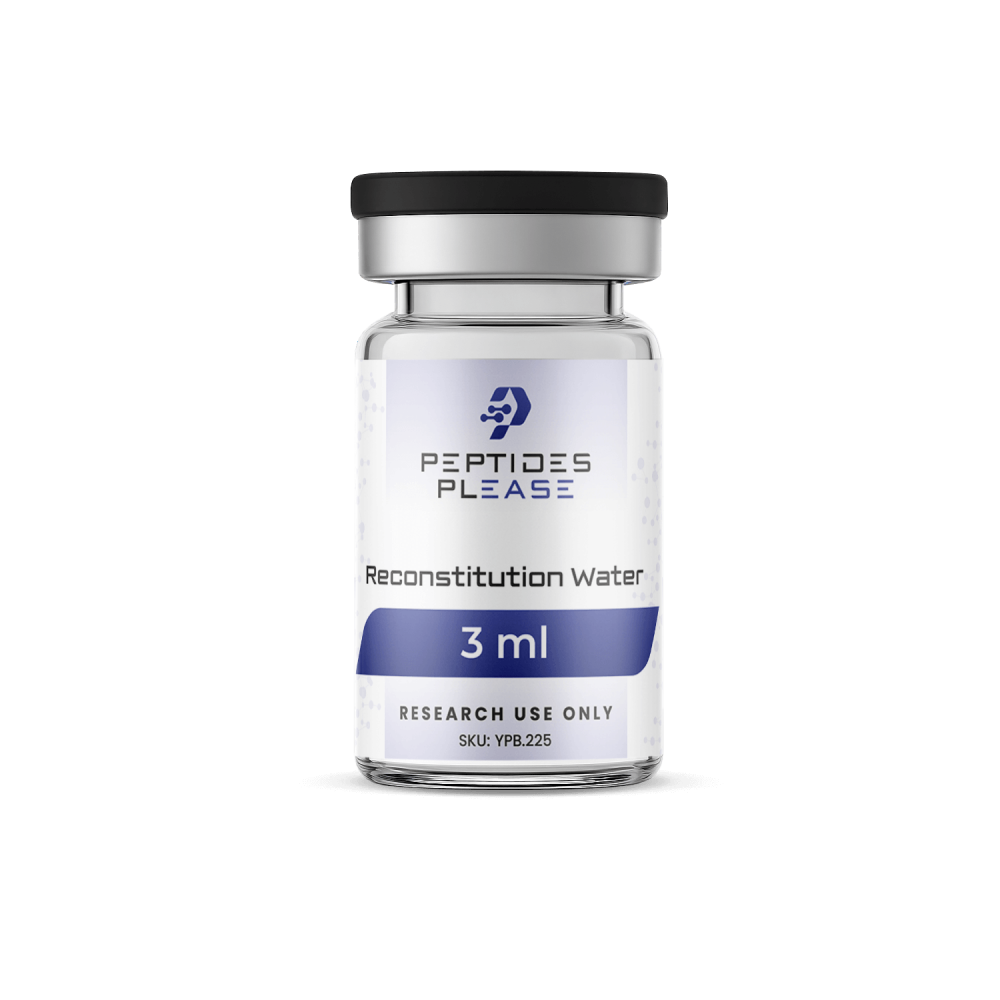
Reconstitution water is the sterile diluent used to turn a lyophilized (freeze-dried) research peptide back into a stable liquid. In most peptide work it is the same product commonly sold as bacteriostatic water: sterile water carrying 0.9% benzyl alcohol as a bacteriostatic preservative. That preservative inhibits bacterial growth so a single vial can be accessed repeatedly for up to 28 days without rapid contamination. The reconstitution water and bacteriostatic water sold here are the same research-grade solution under two names our customers search for. All of it is supplied strictly for laboratory research use and is not for human or animal use. Shop reconstitution water below and add a vial to your order before you check out.
Key Takeaways
- Reconstitution water and bacteriostatic water refer to the same core product: sterile water with 0.9% benzyl alcohol.
- The 0.9% benzyl alcohol lets a multi-use vial stay usable for up to 28 days after the first puncture under standard USP handling.
- The usual lab starting point is roughly 1 mL of diluent for a 2 mg vial, 2 mL for a 5 mg vial, and 3 mL for a 10 mg vial; the water volume sets the concentration.
- Store it at USP controlled room temperature, about 20 to 25 degrees Celsius (68 to 77 degrees Fahrenheit). Do not freeze it.
- It is the standard diluent for dissolving lyophilized research peptides such as BPC-157, CJC-1295 and GHK-Cu.
- Everything here is research-use-only, not for human or animal use, and Peptides Please ships to the USA and Canada.
What Reconstitution Water Is, and Why It Is Also Called Bacteriostatic Water
Reconstitution water, also called reconstitution solution, is a sterile laboratory-grade diluent. The common form is roughly 99.1% sterile or deionized water with 0.9% benzyl alcohol added as a bacteriostatic preservative. In day-to-day peptide research the two names point to the same working solution, which is why we consolidated everything onto one page. There is a narrow technical distinction worth knowing: “reconstitution solution” can also describe a diluent tuned in pH or tonicity for one specific compound, while “bacteriostatic water” specifically means sterile water preserved with 0.9% benzyl alcohol. For the vast majority of lyophilized research peptides, bacteriostatic water is the standard choice. If you want the fuller comparison, read our breakdown of reconstitution solution versus bacteriostatic water and what is in bacteriostatic water.
What It Is Made Of
The preservative is the whole point. Benzyl alcohol at 0.9% works by preventing bacterial reproduction rather than killing microbes outright, which holds the vial in a stable “static” state through repeated withdrawals. Plain sterile water has no preservative and is single-use once opened. Normal saline (0.9% sodium chloride) adds sodium ions that can slow dissolution or unsettle peptides prone to precipitation. Bacteriostatic water sits in the middle for most research: preserved for multi-use, gentle on typical peptides, and stable for up to 28 days. Two deeper comparisons live here: bacteriostatic water vs sterile water and bacteriostatic water vs saline.
What Reconstitution Water Is Used For
Its single job is dissolving lyophilized research compounds into a stable liquid without introducing contamination. Because the 0.9% benzyl alcohol prevents bacterial proliferation during repeated needle punctures, one vial can supply many reconstitutions across its usable window. That makes it the default diluent for growth-hormone secretagogues, recovery peptides and metabolic research peptides that ship in freeze-dried form.
How Much to Add When Reconstituting a Research Peptide
The amount of water you add does not change the total mass of peptide in the vial; it sets the concentration. Concentration equals the mass in the vial divided by the water volume, so less water gives a more concentrated solution and more water gives a more dilute one. A common laboratory starting point for a freeze-dried vial is:
- About 1 mL of bacteriostatic water for a 2 mg vial
- About 2 mL for a 5 mg vial
- About 3 mL for a 10 mg or larger vial
Always check the vial is physically large enough to hold the volume you plan to add. These are general reconstitution volumes for laboratory handling, not human dosing instructions, and nothing here is intended for human or animal use. Add a vial of reconstitution water to your order below.
How to Mix Bacteriostatic Water With a Lyophilized Peptide
Correct technique protects fragile molecules during peptide reconstitution:
- Let both vials reach room temperature and wipe each stopper clean.
- Draw the measured bacteriostatic water into a sterile syringe.
- Direct the water slowly down the inside wall of the vial rather than straight onto the powder, so the stream does not shear the peptide.
- Let the powder dissolve on its own, or swirl gently. Do not shake, since agitation can denature sensitive peptides and create foam.
- Once the solution is clear, it is ready for research use and should be stored as described below.
How Long Bacteriostatic Water Lasts (the 28-Day Rule)
Unopened and stored correctly, a sealed vial is shelf-stable until its manufacturer expiration date, which is typically 12 to 24 months from production. Once the stopper is first punctured, the working window is about 28 days, because each withdrawal is an opportunity for contamination and the preservative only slows, rather than eliminates, that risk over time. Mark the date of first puncture on the vial so you are tracking the 28-day window rather than the manufacture date.
Does It Need to Be Refrigerated?
An unopened vial does not need refrigeration. The standard is USP controlled room temperature, about 20 to 25 degrees Celsius (68 to 77 degrees Fahrenheit), with an allowable range of roughly 15 to 30 degrees Celsius (59 to 86 degrees Fahrenheit). Refrigeration of an unopened vial is unnecessary and risks pushing it toward freezing if the fridge runs cold. After opening, some product labeling permits refrigeration to support stability across the 28-day window; if you refrigerate, keep the vial well above freezing and let it return to room temperature before use.
Can You Freeze Bacteriostatic Water?
Technically it will freeze near 32 degrees Fahrenheit (0 degrees Celsius), but freezing is not recommended. Three things go wrong: water expands as it freezes and can stress the glass and the rubber stopper, which threatens the sterile seal; ice crystals form unevenly so the benzyl alcohol concentrates in the last pockets of liquid to freeze and may not redistribute perfectly on thawing; and a weakened seal is a contamination risk. If a vial freezes by accident, inspect it closely for cracks or a compromised stopper and discard it if there is any doubt.
How and Where to Store It
Keep reconstitution water in its original sterile vial, at controlled room temperature, in a cool, dry, dark place such as a cabinet away from direct sunlight and heat sources. Low humidity helps protect the stopper and label. The worst places are a freezer, a hot car, a windowsill in direct sun, or a steamy bathroom. For travel, keep the vial in its original packaging and out of temperature extremes. Keep the stopper clean between withdrawals and never decant a preserved multi-use vial into a non-sterile container.
Do You Need a Prescription for Bacteriostatic Water?
This depends entirely on the intended use. In the United States, the FDA classifies Bacteriostatic Water for Injection as a drug, specifically a parenteral vehicle, and for human clinical use a retail pharmacy generally dispenses it only against a valid prescription. The products sold here are a different thing: a research-grade diluent supplied strictly for laboratory research use, not for human or animal use. Research buyers are purchasing a laboratory reagent, not a clinical prescription product. Requirements differ by country, and we ship only to the USA and Canada.
Bacteriostatic Water and Water-Based Injectable Research Compounds
A frequent search is what bacteriostatic water is used “for steroids.” In a research context, the answer is the same as for any water-based injectable compound: bacteriostatic water is a non-pyrogenic, preserved, multi-dose diluent used to dissolve or dilute a lyophilized or concentrated compound so a vial can be accessed more than once without rapid contamination. The preservative is what distinguishes it from single-use sterile water in that role. As with everything in this category, this is described for laboratory research only and not for human or animal use. You can read the background science on performance-enhancing peptides for research context.
Signs You Should Discard a Vial
Discard the vial if the liquid turns cloudy or discolored, if you see particulate matter, if the stopper looks cracked or the seal is compromised, if it has frozen, or if it is past 28 days from first puncture or past the printed expiration date. When in doubt, replace it; a fresh vial is inexpensive insurance against a ruined reconstitution.
Pairs With the Peptides You Research
Most freeze-dried compounds in our catalogue need a diluent before any benchwork. Reconstitution water pairs naturally with our BPC-157, CJC-1295 and GHK-Cu ranges, and with the wider popular peptides selection. We ship every vial to researchers across the USA and Canada, and our research compounds are manufactured in certified facilities and verified through independent third-party testing.
Frequently Asked Questions
Is reconstitution water the same as bacteriostatic water?
For almost all peptide research, yes. Both describe sterile water preserved with 0.9% benzyl alcohol. “Reconstitution solution” can occasionally mean a diluent tuned for one specific compound, but in practice the two terms are used interchangeably.
What is reconstitution water made of?
Roughly 99.1% sterile or deionized water plus 0.9% benzyl alcohol, which acts as the bacteriostatic preservative that allows repeated access to the vial.
How long is a vial good for after opening?
About 28 days from the first puncture under correct storage. Sealed and unopened, it is stable until the manufacturer expiration date, typically 12 to 24 months from production.
How much bacteriostatic water should I add?
As a general lab starting point, about 1 mL for a 2 mg vial, 2 mL for a 5 mg vial, and 3 mL for a 10 mg vial. The water volume sets the concentration. This is for laboratory handling, not human dosing.
Does reconstitution water need refrigeration?
An unopened vial does not; store it at controlled room temperature, about 20 to 25 degrees Celsius. Some labeling permits refrigeration after opening, but keep it above freezing.
Can you freeze bacteriostatic water?
It is not recommended. Freezing can crack the vial, damage the stopper seal, and leave the preservative unevenly distributed on thawing.
Do you need a prescription to buy it here?
No. The reconstitution water sold here is a research-use-only laboratory diluent, not a clinical prescription product, and is not for human or animal use.
Buy Reconstitution Water at Peptides Please
Add a vial of research-grade reconstitution water to your order so your lyophilized peptides are ready to dissolve the day they arrive. Buy reconstitution water below, or browse the popular peptides it pairs with. Everything is supplied strictly for laboratory research use and is not for human or animal use.