GDF-8 Peptide
Showing the single result
-
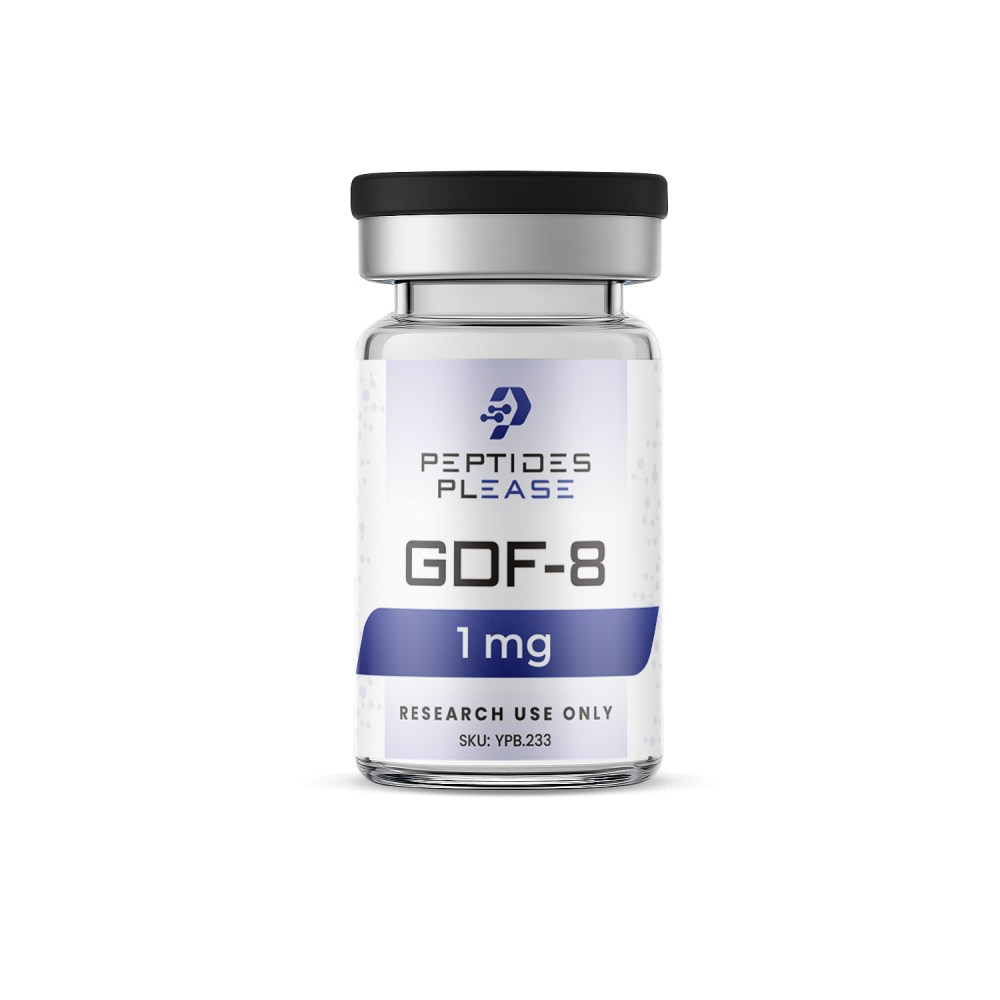 GDF-8 PeptideGDF-8 (1mg)
The GDF-8 peptide, also known as myostatin, plays a pivotal role in regulating skeletal muscle mass and skeletal muscle growth. As a member of the transforming growth factor-beta (TGF-β) superfamily, the gdf 8 peptide acts as a negative regulator, inhibiting muscle growth by limiting the proliferation and differentiation of muscle precursor cells. In natural physiology, it helps maintain skeletal muscle homeostasis, preventing excessive gross muscle hypertrophy. Studies on genetically modified animals lacking functional GDF-8 demonstrate dramatic increases in muscle mass, often accompanied by elevated body weight, highlighting its suppressive influence on increased muscle mass.
In research contexts, inhibiting the gdf 8 peptide has shown potential to promote muscle growth and muscle mass expansion, particularly in models of muscle wasting or for enhancing athletic performance. By blocking GDF-8 signaling pathways, interventions can trigger gross muscle hypertrophy and boost skeletal muscle size, leading to greater overall body weight gains. This makes the gdf 8 peptide a focal point in studies on skeletal muscle growth optimization, with implications for bodybuilding, sarcopenia treatment, and metabolic health, though human applications remain investigational due to regulatory and safety considerations.
Buy GDF-8 Peptide For Research at Peptides Please
Buy GDF-8 Peptide for research at Peptides Please to explore its potential in studies on lean muscle mass, where treatment groups receiving GDF-8 demonstrate significant outcomes compared to controls via serum samples analysis. Researchers investigate myostatin deficiency and myostatin mutation effects through functional analysis, revealing how inhibiting myostatin via the myostatin gene pathway can enhance racing performance in animal models—ideal for advancing your biochemical and performance optimization experiments with high-purity GDF-8.
What Is GDF-8 Peptide?
GDF-8 peptide, also known as myostatin or growth differentiation factor 8, is a protein that acts specifically on the musculoskeletal system to regulate muscle growth by inhibiting excessive hypertrophy and maintaining balance in muscle mass development. As an initial treatment for conditions involving muscle wasting or weakness, such as muscular dystrophy or sarcopenia, GDF-8 inhibition—often through targeted peptides or antagonists—has shown a significant increase in muscle fiber size and strength in preclinical studies, leading to significant effects on overall muscle function and recovery without broadly impacting other tissues.
GDF-8 Peptide Mechanism of Action
GDF-8, a member of the TGF-β superfamily, acts as a negative regulator of muscle mass. It binds to Activin type II receptors (ActRIIA/B), triggering SMAD signaling that drives muscle protein degradation and blocks muscle cell proliferation. Inhibiting GDF-8—such as with its propeptide—unleashes significant muscle growth and repair, making it a promising target for muscle-wasting conditions.
- Ligand Activation: Cells synthesize GDF-8 as an inactive precursor. Furin cleaves it, but it stays latent in a complex with its N-terminal prodomain. Tolloid metalloproteases then activate it by destabilizing the prodomain.
- Receptor Binding: Active GDF-8 binds ActRIIA or ActRIIB, recruiting type I receptors like ALK4 or ALK5 to form a signaling complex.
- Core Signaling Pathway: The complex phosphorylates Smad2 and Smad3, which partner with Smad4 to drive transcription of genes that suppress muscle growth.
- Alternative Pathway: GDF-8 also activates p38 MAPK through TGF-β-activated kinase 1 (TAK1), further inhibiting muscle cell proliferation.
- Effects on Muscle: These pathways block satellite cell activation, proliferation, and differentiation while boosting protein degradation—net result: limited muscle mass.
GDF-8 Peptide Benefits
GDF-8 inhibition drives significant muscle hypertrophy, accelerates muscle and bone regeneration post-injury, and preserves lean mass during obesity treatments. Researchers are exploring it for muscle-wasting diseases like spinal muscular atrophy (SMA), metabolic health gains, and countering musculoskeletal decline.
- Muscle Growth & Preservation: Blocks myostatin to boost hypertrophy, vital for combating neuromuscular disorders and atrophy.
- Musculoskeletal Regeneration: Promotes repair of skeletal muscle and bone after injuries.
- Weight Loss Support: Pairs with GLP-1 agonists to retain lean muscle while shedding fat.
- Osteoarthritis Management: Reduces posttraumatic joint degeneration.
- Metabolic Improvements: Enhances markers like cholesterol, blood pressure, and HbA1c in trials.
GDF-8 Peptide Side Effects
These inhibitors block myostatin to promote muscle mass gains, showing promise for atrophy and obesity (especially with GLP-1 agonists). However, risks include tendon fragility, cardiovascular strain, and metabolic disruptions.
- Tendon/Ligament Fragility: Rapid muscle growth outpaces connective tissue adaptation, raising injury risk.
- Cardiovascular Stress: Bigger muscles demand more cardiac output, potentially burdening the heart.
- Off-Target Metabolic Effects: Myostatin’s broad role may alter bone density and glucose regulation.
- Injection Site Reactions: Antibody therapies like trevogrumab often cause local reactions, fatigue, or headaches.
GDF 8 Peptide Price
GDF-8 (Myostatin) peptide prices for research-grade, purified products typically range from $300 to over $900 for small quantities like 0.1 mg to 1 mg. Common pricing sits around $460 for 1 mg or $750 for 100-500 mcg portions. Bulk, recombinant, or specialized versions such as biotinylated forms often exceed these amounts due to added processing and scale.
What Is The Gdf-8 Protein?
GDF-8, also known as myostatin or growth differentiation factor 8, is a protein belonging to the transforming growth factor-beta (TGF-β) superfamily that acts as a potent negative regulator of skeletal muscle growth and mass. Synthesized as a precursor protein in skeletal muscle cells, it undergoes proteolytic cleavage to form a mature disulfide-linked dimer, which remains bound to its N-terminal prodomain in a latent, inactive complex until activated by further processing, such as by proteases like Tolloid. This secreted myokine binds to activin type IIB receptors (ActRIIB) on muscle cells, inhibiting myoblast proliferation and differentiation to limit muscle development, with mutations or inhibitors leading to increased muscle mass as seen in certain animal models.
What Is Latent GDF-8?
Latent GDF-8, also known as latent myostatin, refers to the inactive precursor form of the GDF-8 protein, where the mature, bioactive dimer remains bound to its N-terminal prodomain after initial proteolytic cleavage. This complex adopts a distinctive “open” configuration—unlike the “closed” latency state of TGF-β—yet maintains inhibitory features like the alpha-1 helix, latency lasso, and fastener elements that prevent receptor binding and muscle-regulating activity. Activation occurs irreversibly via proteases such as BMP-1 or Tolloid, which process the prodomain to release the “spring-loaded” mature GDF-8, enabling it to signal through ActRIIB receptors and suppress muscle growth.
Research GDF-8 Peptide for Sale at PeptidesPlease
Unlock the power of muscle growth and recovery with GDF-8 Peptide, now available for research purposes at PeptidesPlease—your trusted source for high-purity peptides. This potent myostatin inhibitor, backed by cutting-edge studies, supports enhanced lean muscle development, fat loss, and superior athletic performance in lab settings, making it a game-changer for researchers exploring hypertrophy and anti-aging protocols. Sourced from top-tier manufacturers with rigorous third-party testing for 99%+ purity, our GDF-8 comes in convenient lyophilized vials, ready for reconstitution and precise dosing in your experiments.
Frequently Asked Questions
What is the benefit of GDF-8 peptide?
GDF-8, or Growth Differentiation Factor 8, is a protein in the TGF-β superfamily primarily produced by skeletal muscle cells. It acts as a negative regulator of muscle growth by limiting muscle cell proliferation and differentiation.
What is GDF-8?
Yes, GDF-8 is identical to myostatin, the well-known protein that suppresses skeletal muscle mass and development.
What is GDF-8 peptide used for?
GDF-8 peptide functions as a myostatin inhibitor by binding to myostatin and preventing its activation, which allows unrestricted muscle growth and increases muscle mass. Additional benefits include enhanced bone mineral density, faster muscle and bone repair after injury, reduced inflammation, improved recovery from slow-healing injuries like tendon damage, and potential protection against muscle-wasting conditions.
Is GDF-8 myostatin?
GDF-8 peptide is researched for promoting muscle hypertrophy, treating muscle wasting diseases like Duchenne muscular dystrophy and sarcopenia, aiding recovery from musculoskeletal injuries such as ACL tears, preventing bone loss, and improving metabolic health by reducing fat mass and enhancing insulin sensitivity.
Summary
GDF-8, commonly known as myostatin, is a potent member of the TGF-β superfamily that acts as a negative regulator of skeletal muscle growth by binding to activin type II receptors, thereby suppressing myogenic pathways like PI3K/Akt/mTOR and promoting muscle degradation via atrogin-1 and MuRF1. Its inhibition—through natural mutations, propeptides, or experimental blockers—unleashes profound muscle hypertrophy, enhances bone density, boosts satellite cell activity, and improves metabolic outcomes like insulin sensitivity, as evidenced in animal models and early human studies where GDF-8 blockade doubled muscle mass without toxicity. While therapeutic potential shines for conditions like muscular dystrophy, sarcopenia, and cachexia, ongoing research into its latent activation mechanisms and ovarian roles underscores the need for precise inhibitors to harness benefits safely in bodybuilding, anti-aging, and regenerative medicine.