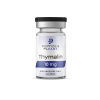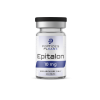
When you line up tb 500 vs thymosin beta 4 side by side, you are not looking at twins. You are looking at a full-length biological operator and its stripped-down, synthetic version built for research purposes. One works inside the body as a naturally occurring peptide. The other steps in like a specialist with a narrower job description. And if you are digging into regenerative medicine, peptide therapy, or anything touching tissue repair, knowing the difference is not optional.
So yeah, pull up a chair because we are getting into structure, function, and the kind of nuance that actually changes how you interpret the data.
Understanding the Thymosin Beta 4 vs TB-500 Differences
The comparison between tb 500 vs thymosin beta 4 usually gets flattened into a simple idea. Same effects, different names. That’s the shortcut version. The real version is more layered, and honestly, more interesting.
Thymosin Beta 4 is a naturally occurring peptide found throughout the body. It plays a role in cell migration, which is a big deal when you are talking about wound healing and tissue repair. It interacts with actin, influences white blood cells, and helps coordinate the healing process in a way that feels more like a conductor than a soloist.
TB-500 is a synthetic version derived from a specific active region of Thymosin Beta 4. It does not replicate the full peptide. It focuses on the parts believed to support tissue healing, muscle recovery, and blood vessel formation. Here’s where the differences sharpen:
- Thymosin Beta 4 operates across multiple systems including heart health, gut health, and immune signaling involving white blood cells
- TB-500 is designed to emphasize cell migration and cellular repair in targeted research environments
- Thymosin Beta 4 contributes to blood vessel growth and the formation of new blood vessels in broader biological contexts
- TB-500 narrows that scope and is typically administered in controlled research settings
Now, here’s the part people skip. That difference in structure changes how each peptide interacts with inflammation. Both are studied for their ability to reduce inflammation, which is relevant in conditions like chronic joint pain or even chronic pain linked to tissue stress. But one operates as part of a natural system, while the other acts more like a focused tool.
Find Reliable Peptide Products for Research at PeptidesPlease
You can have the cleanest hypothesis in the world, but if your materials are questionable, your results are going to wobble like a table with a short leg.
That’s where sourcing comes in, and it is not the glamorous part of research, but it is the part that decides whether your data holds up. PeptidesPlease provides research-grade peptide blends. We know that variability in peptide quality can directly affect outcomes related to tissue repair, wound healing, and even how compounds influence blood vessels or reduce inflammation. If the peptide is degraded or inconsistent, your results can be way off. As such, working with a reliable supplier is not about convenience. It is about protecting the integrity of your work from the ground up.
Nature, Origin and Composition of TB-500 and Thymosin
Thymosin Beta 4 is part of a family of peptides that exist naturally within the human body. It is widely distributed and plays a role in maintaining cellular structure and movement. That movement is key for processes like wound healing, where cells need to migrate to damaged areas and initiate tissue repair.
Because it is a naturally occurring peptide, it integrates into biological systems without needing to force its way in. It supports wound healing by influencing how cells behave during the healing process, including how white blood cells respond to injury.
TB-500, by contrast, is a synthetic version created to isolate the active segment of Thymosin Beta 4. Researchers identified the region associated with cell migration and built a peptide around it. Here is a breakdown of how their composition shapes their function:
- Thymosin Beta 4 consists of 43 amino acids and interacts with multiple biological pathways
- TB-500 is shorter and focuses on mechanisms tied to cellular repair and tissue healing
- Thymosin Beta 4 supports blood vessel growth and blood vessel formation across broader systems
- TB-500 is designed to emphasize specific outcomes like muscle recovery and targeted tissue repair
Now here is where things get a little unexpected. Because Thymosin Beta 4 interacts with a wider range of systems, it has been studied in contexts like hair growth and gut health. Not because it is a cosmetic fix, but because those processes rely heavily on cell migration and blood vessel development.
Regulatory Status of TB-500 and Thymosin
In the United States, both Thymosin Beta 4 and TB-500 exist primarily within research frameworks. They are not broadly approved for human use by regulatory authorities like the FDA.
Thymosin Beta 4 has been examined in clinical settings involving medical applications such as wound healing and heart health. Some studies have looked at its role in conditions that involve inflammation, including multiple sclerosis. Still, approval for general use remains limited.
TB-500 sits in a more restricted lane. As a synthetic version, it is not approved for therapeutic use and is typically administered only in controlled research environments. Here is what that means in practical terms:
- Neither peptide is cleared for routine use by a qualified healthcare provider
- Both are primarily available for research purposes
- Claims related to peptide therapy should be evaluated carefully
- Consultation with a medical professional is essential before considering any experimental context
Even in research discussions, safety considerations come up. Reports sometimes mention mild swelling or reactions at the injection site, though data is limited and not standardized.
Accessibility in the Market of TB-500 and Thymosin
Thymosin Beta 4 is more complex to produce. Its full-length structure makes synthesis more demanding, which can limit supply and increase cost. It is often sourced through specialized research channels rather than broad commercial distribution.
TB-500, being shorter and easier to manufacture, is more widely available. You will see it across multiple peptide suppliers, which sounds convenient until you realize that quality can vary quite a bit. A peptide that shows up easily might still fall short in purity or stability. And when you are studying things like blood vessels, tissue repair, or even mechanisms that reduce inflammation, small inconsistencies can create big distortions in results.
Research on TB-500 and Thymosin
Thymosin Beta 4 has been studied more extensively. Its role in wound healing is one of the most documented areas, particularly in how it supports wound healing through cell migration and blood vessel formation. It has also been explored in cardiovascular contexts, including heart health and recovery after tissue damage.
There is also research touching on hair growth, where increased blood vessel growth and improved circulation may play a role. Again, this ties back to how the peptide influences new blood vessels and cellular activity. Some studies also look at its potential role in conditions involving chronic joint pain, though findings are still early and not widely confirmed.
And yeah, you will occasionally see discussions linking these peptides to broader areas like stem cell therapy or even recovery pathways tied to alcoholic liver injury. But those connections are still being explored and should be treated as developing research rather than settled conclusions.
TB-500 and Thymosin: Limitations of Current Evidence
For all the excitement around these peptides, the evidence is still catching up. There are promising signals, especially in areas like tissue repair, wound healing, and inflammation control, but the data is not complete. Here are the main limitations researchers are dealing with:
- A limited number of large-scale human studies
- Heavy reliance on preclinical and animal models
- Variability in peptide sourcing and study design
- Lack of standardized dosing and administration protocols
And this part matters. Because without consistent data, it becomes difficult to draw firm conclusions about how these peptides perform across different conditions.
Even when studies suggest benefits like improved muscle recovery or the ability to reduce inflammation, those findings need to be replicated under controlled conditions.
Stability and Half-Life of TB-500 and Thymosin
If you have ever left something out on the counter a little too long and came back wondering what just happened, you already understand why stability matters. Peptides are not immune to breakdown. In fact, they are kind of sensitive about it.
When comparing TB-500 and Thymosin Beta 4, stability and half-life are shaped by structure. Thymosin Beta 4, being a full-length naturally occurring peptide, has a more complex configuration. That can mean a shorter half-life in certain environments because the body recognizes and processes it through normal biological pathways. It is part of the system, so the system knows what to do with it.
TB-500, as a synthetic version, is often discussed in terms of extended activity. Because it is a fragment, some researchers suggest it may circulate differently, potentially allowing for longer interaction with tissues involved in wound healing and tissue repair. That said, data is not standardized across studies, so conclusions should be handled carefully.
Bioavailability of TB-500 and Thymosin
Now we get into the question everyone quietly asks. How well do these peptides actually get where they need to go? Bioavailability is all about how a compound is absorbed, distributed, and utilized. For peptides like these, delivery method matters. A lot.
- TB-500 is typically administered in research through injection-based models, which allows it to bypass digestive breakdown
- Thymosin Beta 4, due to its size, may face more rapid enzymatic degradation depending on how it is introduced
- Both peptides are studied for their ability to influence cell migration and support wound healing at the tissue level
- Distribution may affect how they interact with blood vessels and areas requiring tissue repair
After administration, researchers look at how these peptides influence the healing process, particularly in areas like muscle recovery or localized inflammation. The ability to reduce inflammation and support tissue healing depends heavily on whether the peptide reaches the target site intact.
Tolerability of TB-500 and Thymosin
In controlled environments, both TB-500 and Thymosin Beta 4 are generally described as being well tolerated in preclinical studies. But here is the important part. Data is limited, especially when it comes to large-scale human observations.
Some reports mention mild swelling or irritation at the injection site. Nothing dramatic, but enough to note. These reactions are not unique to these peptides and can occur with many compounds introduced through injection.
Researchers also monitor how these peptides interact with immune responses. Since Thymosin Beta 4 is involved with white blood cells, its role in inflammation and immune signaling becomes a point of interest. The ability to reduce inflammation is one of the reasons it is studied in contexts involving chronic pain or chronic joint pain.
Still, none of this translates into general use. These compounds are not approved for human use, and any discussion around tolerability should stay grounded in research contexts. A qualified healthcare provider or medical professional would be essential in any scenario involving experimental compounds.
TB 500 Fragment vs Thymosin Beta 4
You are not just comparing two peptides. You are comparing a full system versus a focused fragment.
- Thymosin Beta 4 is the complete peptide with 43 amino acids, influencing multiple pathways including blood vessel formation and immune response
- TB-500 is a fragment designed to isolate the active region associated with cell migration and tissue repair
- The full peptide supports broader biological processes including hair growth, gut health, and heart health
- The fragment narrows its function, often studied for muscle recovery and targeted wound healing
Here is the thing. The full-length peptide behaves like a multitool. It can interact with different systems, influence new blood vessels, and support a wide range of biological activities. That includes areas like regenerative medicine where complexity matters.
The fragment, on the other hand, is more like a precision instrument. It is built to focus on specific mechanisms without carrying the full biological weight of the original structure.
Ethics Considerations in the Use of TB-500 and Thymosin
Both TB-500 and Thymosin Beta 4 are primarily available for research purposes. That means they are not cleared for general medical applications or human use. Any attempt to move outside that boundary raises serious ethical concerns.
- Use should remain within controlled research environments
- Claims about peptide therapy should be supported by evidence, not assumptions
- Misrepresentation of research compounds as approved treatments can mislead individuals dealing with chronic pain or other conditions
- Oversight from a qualified healthcare provider or medical professional is critical in any experimental discussion
When people start talking about benefits like hair growth or faster tissue repair, the line between research and application can blur. That is where responsibility comes in. Ethical research is not just about what you can do. It is about what you should do. And yeah, that line matters more than ever in a space that is still evolving.
Common Misconceptions About TB 500 and Thymosin Beta 4 Differences
One of the biggest misconceptions is that TB-500 and Thymosin Beta 4 are identical. They are not. One is a naturally occurring peptide. The other is a synthetic version designed to mimic part of its function.
Another common idea is that these peptides are fully established in regenerative medicine. The reality is more nuanced. Research is ongoing, and while there are promising findings related to wound healing, blood vessels, and inflammation, the evidence is not complete.
You will also hear claims that these compounds can directly treat conditions like multiple sclerosis or alcoholic liver injury. These connections are still being studied and should not be treated as confirmed outcomes.
And then there is the assumption that more availability means more reliability. Not even close. Accessibility in the market does not guarantee quality or consistency.
Explore Trusted Peptide Products Designed for Research from PeptidesPlease
At the end of the day, all this talk about structure, function, and research only matters if the materials you are working with actually hold up. In peptide research, the difference between a clean result and a confusing one often comes down to what you started with.
PeptidesPlease focuses on providing research-grade peptides designed for consistency and reliability. That includes products tested for purity, manufactured in controlled environments, and verified through independent third-party labs.
Frequently Asked Questions
Is Thymosin Beta-4 the same as TB500?
Thymosin Beta-4 is a naturally occurring peptide, while TB-500 is a synthetic version derived from a specific active region of that peptide.
What is the difference between TB 500 and Thymosin Beta 4?
The main difference comes down to structure and scope. Thymosin Beta-4 is a full-length peptide with broader biological activity, while TB-500 is a shorter fragment designed for targeted research into processes like tissue repair and cell migration.
How is TB 500 related to Thymosin Beta 4?
TB-500 is modeled after a functional segment of Thymosin Beta-4. It was developed to isolate and study specific mechanisms associated with the parent peptide.
How do TB 500 and Thymosin Beta 4 compare in research timelines?
Thymosin Beta-4 has been studied longer and includes more clinical research, while TB-500 research is more recent and largely focused on preclinical models.
How does Thymosin Beta 4 occur naturally compared to TB 500?
Thymosin Beta-4 is found in human tissues and plays a role in biological processes like wound healing. TB-500 does not occur naturally and is created in laboratory settings for research purposes.
Can TB 500 and Thymosin Beta 4 be used interchangeably in studies?
Not exactly. While they share similarities, their structural differences mean they may produce different outcomes depending on the research design.
Are TB 500 and Thymosin Beta 4 measured differently in experiments?
Yes. Due to differences in size and composition, they may require different analytical methods and dosing considerations in experimental setups.
How quickly does TB 500 act compared to Thymosin Beta 4 in research models?
There is no universally established timeline. Some models suggest TB-500 may act more quickly in targeted areas, but results vary depending on study conditions.
Summary
The comparison between Thymosin Beta 4 and TB-500 comes down to structure, origin, and scope. Thymosin Beta 4 is the full-length, naturally occurring peptide that's deeply embedded in biological systems and supported by a broader research foundation. TB-500 is its streamlined, synthetic counterpart designed to isolate and study specific functional effects with a narrower focus.
Both have their place in research. Both come with limitations. And neither should be treated as a shortcut to conclusions that the science hasn’t fully reached.At PeptidesPlease, we don’t play fast and loose with research materials. We provide research-grade peptides with ≥99% purity, manufactured in certified facilities and verified through independent third-party laboratory testing. No mystery batches. No questionable sourcing. Just clean, consistent compounds you can actually build data on.